
Land Clearing Pros of Springfield MO: Land Clearing and Grading in Springfield, MO
Clearing takes off what grows; grading moves the dirt underneath, and the moment it does, the county permit applies.
- Springfield and 20 miles around
- Licensed, insured local contractors
- Typical price ranges on every page
- Ask for a written price first
- County permit rules explained
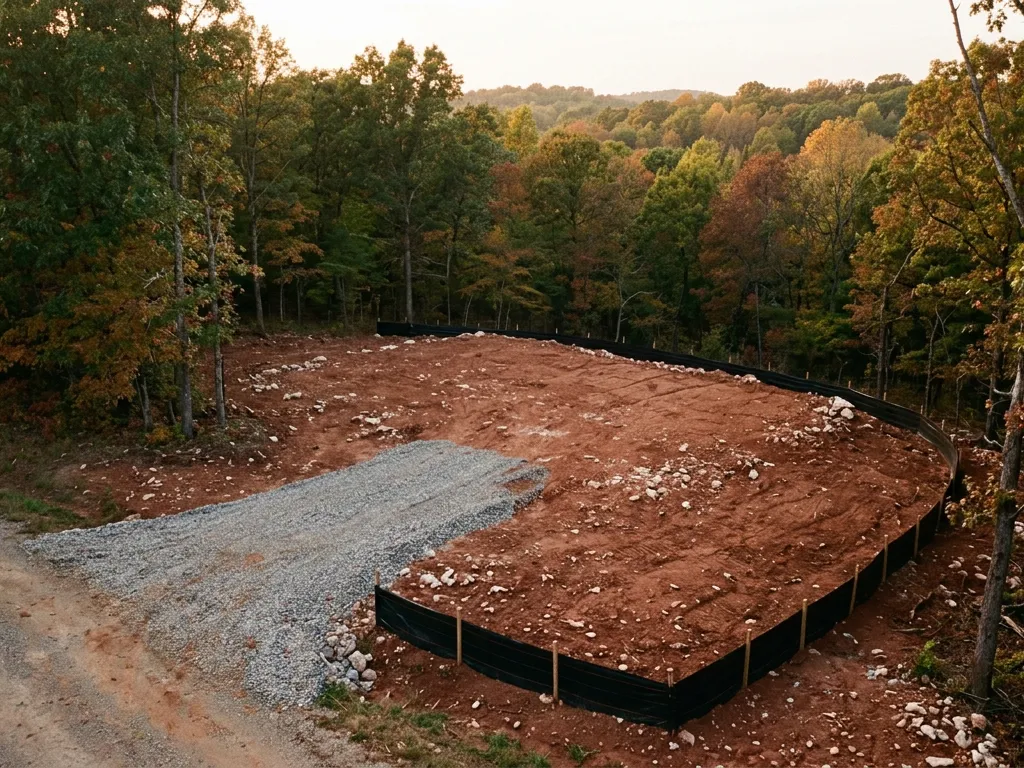
Land Clearing Pros of Springfield MO explains land clearing and grading for lots and acreage around Springfield, MO where the ground has to be shaped after it is cleared: a house pad, a shop or barn site, a driveway, or a yard that drains away from the foundation. Clearing takes off the trees and brush. Grading removes the roots and moves soil to set the levels and the slope. Done as one plan, the clearing leaves the site ready for the grade.
Grubbing the roots out before grading costs a few machine hours at $165 to $235 per hour; grade over them instead and they rot and settle under the pad, and regrading a small home site runs $2,000 to $5,000 again.
When a Cleared Lot Also Needs Dirt Work
Most lot clearing and grading around Springfield is for something being built: a house pad that has to sit level, a gravel drive that needs a crown and a ditch, a shop site cut into a slope, or a yard reshaped so water runs away from the foundation. If the ground will only be lawn, pasture or trail, it usually needs no grading at all, and lot clearing alone does the job.
Grading Costs and Missouri Machine Rates
HomeGuide's land clearing guide prices grading a small, mostly level home site as one job. Bigger, sloped or rocky sites cost more and are usually billed by the machine hour, so the table adds Missouri dozer, skid loader and excavator rates from the University of Missouri Extension custom rate survey (G302, revised 2026). Those rest on few responses, and the guide warns that low counts limit confidence. Imported fill, a survey or soil report, and silt fence are separate lines; ask for each in writing.
$2,000 to $5,000
Grading a small, mostly level home site. The Missouri hourly rates come from MU Extension's custom rate survey (few responses); slope, rock, how much soil moves and whether fill comes in move the number most.
| Job | Typical range | Figure from |
|---|---|---|
| Grading a small, mostly level home site | $2,000 to $5,000 | HomeGuide, 2025 |
| Bulldozer over 150 hp with operator, per hour (Missouri) | $165 to $235 per hour | MU Extension G302, 2026 |
| Skid loader with operator, per hour (Missouri) | $100 to $150 per hour | MU Extension G302, 2026 |
| Medium or large excavator with operator, per hour (Missouri) | $140 to $250 per hour | MU Extension G302, 2026 |
| Land clearing, average per acre | $1,200 to $8,000 per acre | HomeGuide, 2025 |
Clear, Grub, Strip, Then Grade
The order follows the ground. Trees and brush come off first. Then stumps and roots are pulled (grubbing and root raking), because roots left in the ground rot and settle under anything built on them. The topsoil is stripped and stockpiled, the subsoil is cut and filled to the levels the plans call for, and the topsoil goes back where grass will grow. Silt fence goes up on the downhill edge before the soil is bare. For a house, home site clearing covers the steps before the grade.
Grading Always Disturbs the Root Zone
Greene County requires a Grading Permit Application for any non-agricultural land disturbance and defines land disturbance as activity that disturbs the root zone of existing vegetation. Grading does that by definition, so a non-agricultural grading job in the county starts with that permit; Christian County's Soil Erosion Control Permit uses the same definition. Disturbed sites over 1 acre also need a Missouri DNR land disturbance permit. Inside Springfield, the city requires a land disturbance permit for sites disturbing 1 acre or more, or less when part of a larger common plan, and every construction site must comply with City Code Chapter 96 whatever its size.
Sinkholes, Fragipan and Rock Under the Grade
Greene County's Design Standards (1999) bar removing ground cover within 25 feet of a sinkhole flooding area in moderate hazard areas and call for a silt barrier around that buffer, so a sinkhole on the lot shapes the grading plan. South toward Nixa, the Captina-Needleye soils mapped at the town's center point carry a dense fragipan about 27 to 29 inches down, which a deep cut can reach, and Nixa has its own land disturbance and erosion control ordinance. Toward Ozark, the soil is a gravelly silt loam where chert comes up in the cut.
Sites That Need a Grade, Not Just a Clearing
- A house or shop pad going on sloped ground
- A drive that turns to mud or washes out
- Water running toward the foundation after rain
- Stumps and roots where the slab will sit
- Low spots that hold water after a storm
- A lot left uneven after an old clearing
Plan Clearing and Grading in Springfield
Call with the lot size, what is being built and whether a sinkhole or creek is nearby, and ask what to sort out before the machines arrive.
Call (417) 759-5914Clearing and Grading Available In
Springfield and the qualifying towns inside the 20-mile service area.
Frequently Asked Questions
Clearing and Grading Questions in Springfield
How much does land clearing and grading cost?
HomeGuide puts land clearing at $1,200 to $8,000 per acre and grading a small, mostly level home site at $2,000 to $5,000. Bigger or sloped sites are often billed by the hour; MU Extension's Missouri survey puts a large bulldozer with operator at $165 to $235 per hour.
Do I need a permit to grade my property in Greene County?
Yes, for non-agricultural work. Grading disturbs the root zone of existing vegetation, which is how Greene County defines land disturbance, and disturbed sites over 1 acre also need the Missouri DNR permit.
What is the difference between land clearing and grading?
Clearing removes trees, brush and stumps from the surface. Grading moves the soil underneath to set levels and slope for a pad, drive or drainage. Many building sites need both.
Does Springfield require a permit for grading?
The City of Springfield requires a land disturbance permit for sites disturbing 1 acre or more, or less as part of a larger common plan, and every construction site must comply with City Code Chapter 96.
Can you grade over roots and stumps?
Not under anything built. Roots rot and settle, so they are grubbed out first. Under lawn or pasture, stumps ground below grade are usually enough.