
Land Clearing Pros of Springfield MO: Land & Brush Clearing in Strafford, MO
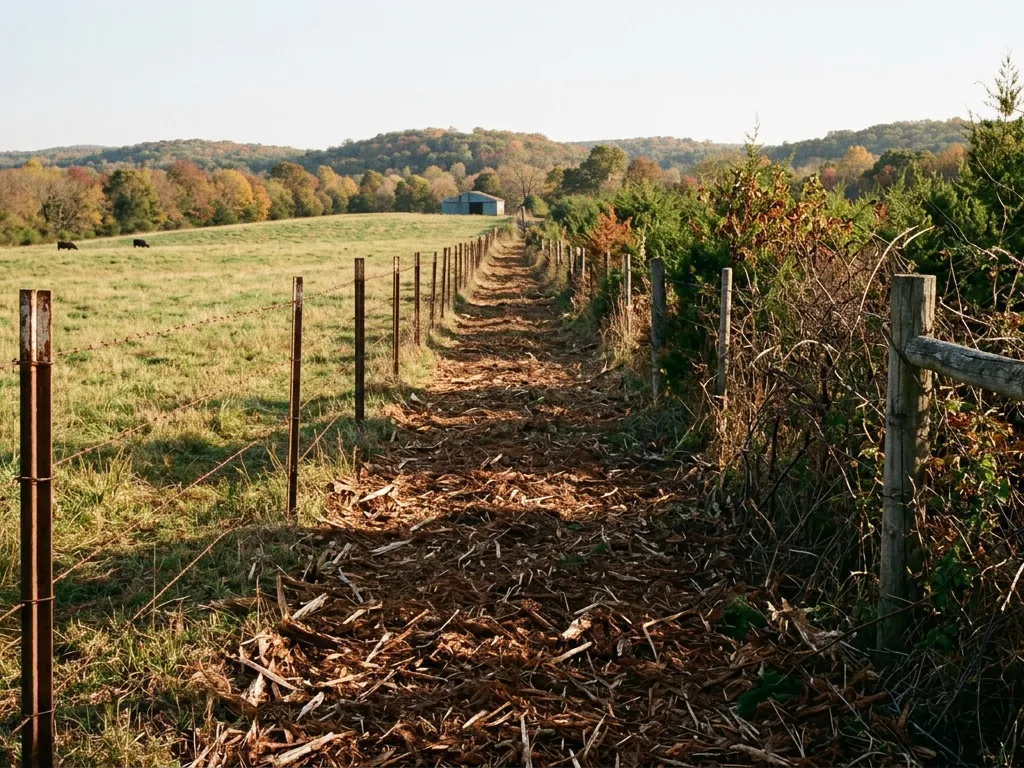
Farm ground east of Springfield where brush comes back faster than anyone can mow it, on soils that hold water in spring.
- Springfield and 20 miles around
- Licensed, insured local contractors
- Typical price ranges on every page
- Ask for a written price first
- County permit rules explained
Land Clearing Pros of Springfield MO covers land and brush clearing in and around Strafford, the Greene County town of about 2,600 people (2020 Census) roughly 11 miles east-northeast of central Springfield along Interstate 44. The country around it is pasture, hay ground and small acreage, and most clearing here is brush and cedar that came back after a field was left for a few years. Sumac and blackberry return from the roots, so the plan matters as much as the machine: clear the field once, properly, and then keep it open.
Mulching brush out of a Strafford field while it is still brush runs $800 to $1,800 per acre; once it is half brush and half trees, the same field runs $1,600 to $3,000 per acre and the fence rows have gone with it.
Greene County Permits Around Strafford
Outside the city limits, Greene County's grading permit applies to non-agricultural land disturbance, defined as anything disturbing the root zone. Normal farming activity is generally outside the county permits; confirm with the county if the ground is being reshaped. Grubbing a home site or a commercial pad along the interstate is not farming, and above one acre the county also asks for a copy of the state land disturbance permit. The county treats a pond as agricultural unless soil leaves the property or the pond sits in a mapped Special Flood Hazard Area.
Needleye Soils East of Town
The USDA soil survey maps the center of Strafford as Needleye silt loam on 1 to 3 percent slopes, somewhat poorly drained, with a fragipan about 23 inches down. Water perches on that layer after rain and through the winter, so fields that look dry on top can be soft a few inches down.
Tracked machines handle it best, and the cleanest jobs are done from late summer into fall. Grubbing, which moves soil, is the part to hold for dry ground; mulching brush above it can go ahead in more weather.
Old Field Lines Along I-44
Most Strafford-area fields were cleared once, decades ago, and then left. Sumac and blackberry resprout from the roots, so a one-time clearing buys only a few seasons unless it is followed by mowing or grazing.
Fence rows here often follow old field divisions rather than surveyed boundaries. Before clearing a fence row that might be a boundary, agree the strip with the neighbor, and get a survey if there is any doubt. Clearing the fence row at the same time as the field also removes the cedar seed trees that would reseed it.
ZIP codes covered: 65757
Local tip for Strafford: If a fence row might be the property line, agree the strip with the neighbor first; a land survey runs $500 to $1,500 if there is any doubt.
What Clearing Costs Around Strafford
$800 to $3,000 per acre
Brush removal, per acre. Light brush and broomsedge sit at the bottom; once saplings have outgrown a bush hog, the field prices as heavy brush.
| Job | Typical range | Figure from |
|---|---|---|
| Brush removal, per acre | $800 to $3,000 per acre | HomeGuide, 2025 |
| Light brush removal, per acre | $800 to $1,800 per acre | HomeGuide, 2026 |
| Heavy brush removal, per acre | $1,600 to $3,000 per acre | HomeGuide, 2026 |
| Forestry mulching, per acre | $400 to $800 per acre | HomeGuide, 2023 |
| Mowing pasture or CRP ground, per acre (Missouri) | $12 to $25 per acre | MU Extension G302, 2026 |
| Land survey | $500 to $1,500 | HomeGuide, 2025 |
What Overgrown Ground Near Strafford Looks Like
- Fields gone to blackberry, sumac and broomsedge
- Fence rows that are solid walls of cedar
- Ground that stays wet and soft into spring
- Pasture that carries fewer cattle every year
Brush Taking Back a Strafford Field?
Note whether the saplings are still small enough for a bush hog, since that is the line between light and heavy brush pricing.
Call (417) 759-5914Brush Clearing in Strafford
Clear the field once with a forestry mulcher, then keep it open with mowing, grazing or spot herbicide. More on brush clearing around Strafford.
Fence Line Clearing in Strafford
Cedar fence rows come out best in the same visit as the field, once the line is agreed with the neighbor. More on fence line clearing.
Acreage Clearing in Strafford
Larger fields east of town are priced by the acre, and the thickness of the growth sets where each acre falls in the band. More on acreage clearing.
Bush Hogging in Strafford
A mower over the field at least once a year is what keeps sumac and blackberry from taking it back. More on bush hogging.
Services Available in Strafford
Brush Clearing
Briars, sumac and sapling thickets cleared before they turn into trees.
Learn moreFence Line Clearing
Trees and brush cleared off the wire so you can fix or drive the fence.
Learn moreAcreage Clearing
Five acres and up of brush, cedar or woods, cleared to a plan.
Learn moreBush Hogging
Rotary cutter mowing for pasture and light brush, before it outgrows the tractor.
Learn more
Frequently Asked Questions
Clearing Questions in Strafford
How much does land clearing cost near Strafford?
Most land clearing runs $1,200 to $8,000 per acre; light brush alone runs $800 to $1,800 per acre.
What are the signs my Strafford field needs clearing?
Blackberry and sumac spreading across it and fence rows grown into walls of cedar. Once saplings outgrow a bush hog, it is a mulcher job.
Why do brush and sumac keep coming back after clearing?
They resprout from roots. Clearing once has to be followed by mowing at least yearly, grazing or spot herbicide to keep a field open.
When is the best time to clear around Strafford?
Late summer through fall, when the Needleye soils mapped here are driest. They hold water on a fragipan in wet seasons and rut under heavy machines.
Do I need a permit to clear land near Strafford?
Normal farming activity is generally outside Greene County's grading permit; confirm with the county if the ground is being reshaped. Grubbing for a building or commercial site needs one, and the state permit applies above one acre.