
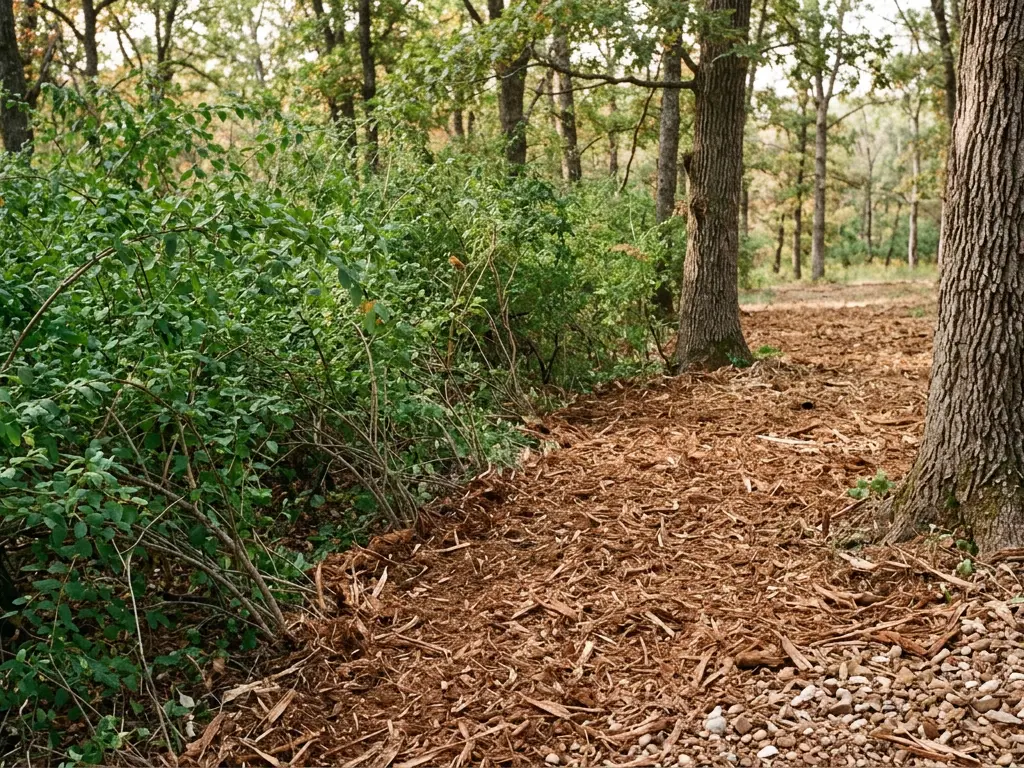
Open the woods, keep the trees
Land Clearing Springfield MO: Underbrush Clearing in Springfield
Clear the understory and leave the canopy: a park-like woods you can see into, walk through and hunt.
- Springfield and 10 nearby townsGreene and Christian County, all within 20 miles
- Licensed, insured local contractorsWe work with them; ask for proof before work starts
- Written price firstPer-acre ranges published on every service page
- Calls answeredMonday to Saturday, 7am to 6pm
Land Clearing Springfield MO arranges underbrush clearing for wooded lots and acreage around Springfield, where the goal is not bare ground but open woods: the honeysuckle, saplings, briars and small cedar under the canopy are mulched out, and the mature oaks, hickories and walnuts stay. It is selective work, slower than clearing a field, and the result depends as much on the operator's judgment as on the machine.
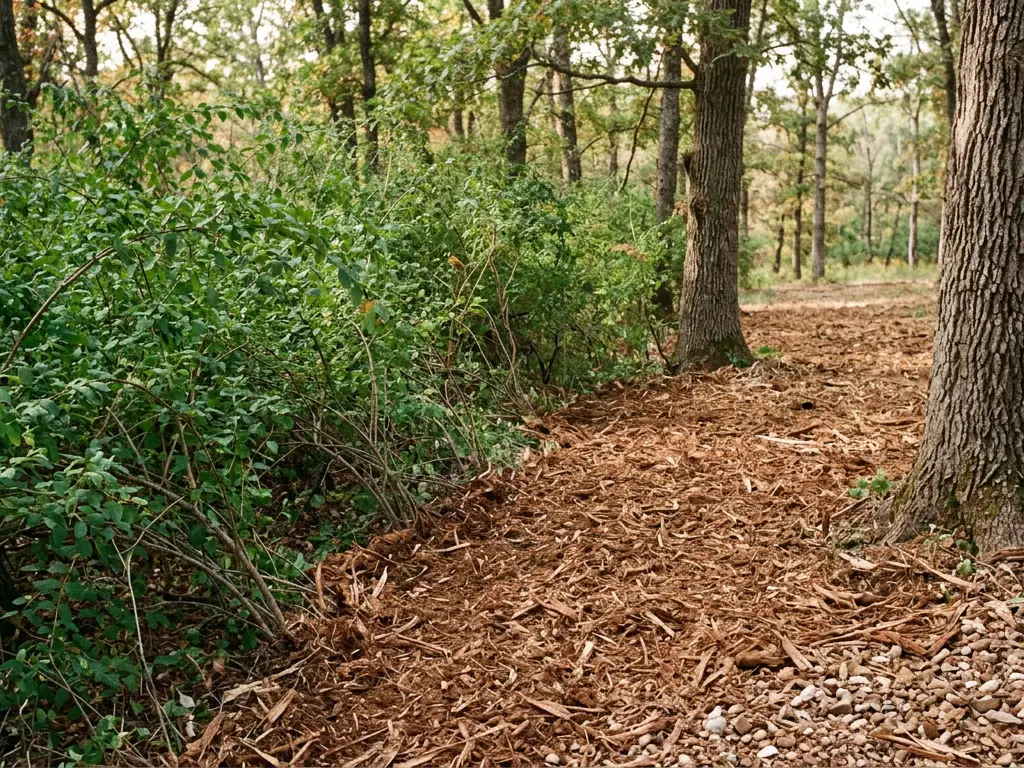
Opening the understory while it is brush and saplings is light clearing at $1,200 to $2,500 an acre; let it grow until the understory trees compete with the canopy and it becomes moderate clearing at $2,500 to $4,500, with the big trees harder to protect.
Typical price
$1,200 to $2,500 an acre
Light clearing of shrubs, underbrush and small trees runs $1,200 to $2,500 an acre (HomeGuide, November 2025). Selective work costs more per acre than clearing everything, because the operator works around the trees that stay, but it saves on debris because nothing large comes down.
Get a price: (417) 759-5914Woods that need the understory cleared
- You cannot see more than a few yards into the trees
- Honeysuckle green in the understory long after the oaks drop their leaves
- No young oaks coming up under the old ones
- Deer and turkey sign only on the edges
- Dead limbs and blowdowns piled in the brush
- A view to the valley lost behind saplings
Deciding what stays
The most important part of an underbrush job happens before the machine starts: walking the woods and marking what stays. Healthy oaks, hickories, walnuts and any tree worth keeping get a ribbon. Dead and dying trees near a trail, a house or a fence get flagged to come down. Everything under a set size, usually a few inches across, goes.
Leave some of the native shrubs and young hardwoods if you want wildlife cover. Clearing to a bare forest floor looks tidy, but a woods with no young trees has nothing to replace the old ones.
Protecting the trees that stay
Oak roots spread well beyond the drip line and sit shallow in the silt loam over the fragipan that underlies much of the area, including around Battlefield and Nixa. Tracked machines spread their weight, but repeated passes on wet ground still compact soil over the roots. Ask the operator to work the woods when the ground is firm, keep the mulching head off the bark, and avoid piling mulch deep against trunks.
Tell us the acreage and what is growing on it, and hear a typical price range before anyone drives out.
Call (417) 759-5914Bats, big trees and timing
Underbrush clearing seldom takes trees big enough to matter to bats, but where larger trees do come down on land in a federal cost-share program, Missouri's Natural Resources Conservation Service policy has protected potential roost trees, those over 9 inches in diameter with loose or peeling bark, cracks or broken tops, during the summer. Shagbark hickory is the classic example. Winter work avoids the question and also lets the operator see the honeysuckle, which stays green after everything else has dropped.
After the woods are open
Expect the understory to try to come back, especially honeysuckle and sprouting hardwoods. A follow-up pass a year later, spot herbicide on resprouts, or a prescribed burn on larger tracts, guided by the Missouri Department of Conservation, keeps it open. Planting native shrubs into the gaps can also crowd out the invaders.
Questions people ask
How much does underbrush clearing cost?
Light clearing of underbrush and small trees runs $1,200 to $2,500 an acre (HomeGuide, November 2025). Selective work around many trees sits toward the top of that range.
What are the signs my woods need underbrush clearing?
You cannot see far into the trees, honeysuckle is green after the oaks drop their leaves, and no young oaks are coming up. Wildlife sign only along the edges is another clue.
Will underbrush clearing hurt my big trees?
Not if it is done carefully: work when the ground is firm, keep the head off the bark, and avoid deep mulch against trunks. Mark the trees that stay before work starts.
Is underbrush clearing good for deer and turkey?
Opening the understory lets sunlight reach the ground, which brings back browse and forbs. Leaving some cover in patches gives wildlife both food and shelter.
When is the best time to clear underbrush?
Late fall and winter. The ground is firmer, honeysuckle is easy to spot because it stays green, and nesting season is over.
Often done together
- Bush honeysuckle removalThe green wall under the oaks in November is bush honeysuckle. It comes back from the stump, so removal is a two-step job.
- Forestry mulchingOne machine cuts, grinds and spreads brush and small trees as mulch. No piles, no burning, no bare dirt.
- Trail and right-of-way clearingA trail, a lane or a power line corridor is clearing in a line: narrow, long, and priced by how far the machine travels in a day.
- Land Clearing Springfield MO: Land Clearing in BattlefieldWooded residential lots, plenty of stumps after every storm, and ground that holds water longer than it looks like it should.
Tell us what is growing and how much of it
Say roughly how many acres, what has taken over (cedar, honeysuckle, brush, saplings, a grown-in fence row) and what you want the ground to become. You will hear which method usually fits and what it tends to cost per acre before anyone drives out.
Call (417) 759-5914