Land Clearing Pros of Springfield MO: Tree Clearing and Bats in Missouri: When to Cut
Land Clearing Pros of Springfield MO wrote this guide because the timing rules for cutting trees around protected bats are easy to get wrong in both directions. Some owners have heard of a summer ban on all tree cutting in Missouri; others have never heard of any rule. What applies depends on whether a federal agency funds, permits or carries out your project. This page states only what the current federal documents say, and says plainly where we could not confirm a rule.
The bats behind the rules
Four federally protected bats matter for clearing in Missouri. Three of them roost in trees in summer, and the Indiana and northern long-eared bats hibernate in caves and mines. The gray bat roosts in caves and other sheltered places.
| Bat | Federal status | Summer roosts |
|---|---|---|
| Indiana bat | Endangered | Breeding females mostly under the peeling bark of dead or dying trees, often in canopy gaps, along fence lines and at wooded edges |
| Northern long-eared bat | Endangered, reclassified by a final rule published in 2022 | Under bark and in cavities or crevices of live trees and snags; less often barns and sheds |
| Tricolored bat | Proposed as endangered in 2022, per the August 2025 Missouri analysis | Trees during the summer |
| Gray bat | Endangered | Caves, bridges and other sheltered structures |
The U.S. Fish and Wildlife Service says 72 percent of Indiana bats hibernate at just four sites in Missouri, Indiana and Illinois. Its Missouri field office assumes the Indiana bat occurs throughout the entire state, and assumes the gray bat occurs in 102 of the state's 114 counties.
The dates the Fish and Wildlife Service uses in Missouri
The current federal document is the Missouri Ecological Services Field Office's Standing Analysis for the Missouri Threatened and Endangered Species Determination Key (Version 2.0, August 2025). In it, tree removal affecting suitable roosting habitat for the Indiana bat or northern long-eared bat during the summer occupancy period, which the document defines in Missouri as April 1 through October 15, automatically reaches a "may affect" outcome that sends the project to further review. Approved surveys showing the species absent are the exception.
For the tricolored bat the key uses a shorter pup season, May 15 through July 31, when young bats may not yet fly.
Winter cutting is not a free pass for large jobs. The analysis says bats can still be harmed when much of their roosting and foraging habitat disappears, even if it is cut while they hibernate. It sets acreage thresholds by the forest cover around the project: for the Indiana bat, from 5 acres of tree removal where surrounding forest cover is under 10 percent, up to 50 acres where it is half or more. Above the threshold, the project goes to a biologist for review.
Who those dates apply to
The analysis draws the line at a federal nexus, which it defines as a connection to an action by a federal agency, such as funding, authorization or implementation.
- Projects with federal funding, permits or agency work. Cost-share money from a federal agency such as the Natural Resources Conservation Service, or a federal permit such as an Army Corps of Engineers section 404 permit for work in streams or wetlands, creates a federal nexus by that definition. Those projects go through consultation under section 7 of the Endangered Species Act, where the Missouri key applies the April 1 to October 15 period.
- Private projects with no federal involvement. The analysis says section 7 consultation is not required. It also says those projects remain subject to the take prohibitions in section 9 of the Act, and may warrant an incidental take permit if take of a listed species is reasonably certain. The key can be used for technical assistance on a private project to judge that likelihood.
- County permits. Greene County's grading permit is triggered by disturbing the root zone of existing vegetation. Its page says nothing about bats or a cutting season.
We found no Missouri, Greene County or Christian County rule setting a tree-cutting season for private land. That is not proof none exists, and the federal take prohibition applies either way.
Why the NRCS dates you may have heard differ
Older Natural Resources Conservation Service guidance for Missouri set its own summer no-cut window for NRCS-assisted work, and different versions have used different end dates. Its 2003 sheet described potential Indiana bat roost trees as those over 9 inches in diameter with loose or peeling bark, cracks or broken tops. We could not open a current NRCS Missouri page that states a window, so this guide gives no NRCS dates. If NRCS money is in your project, follow the window your contract or field office gives you.
Which trees on Springfield-area land matter
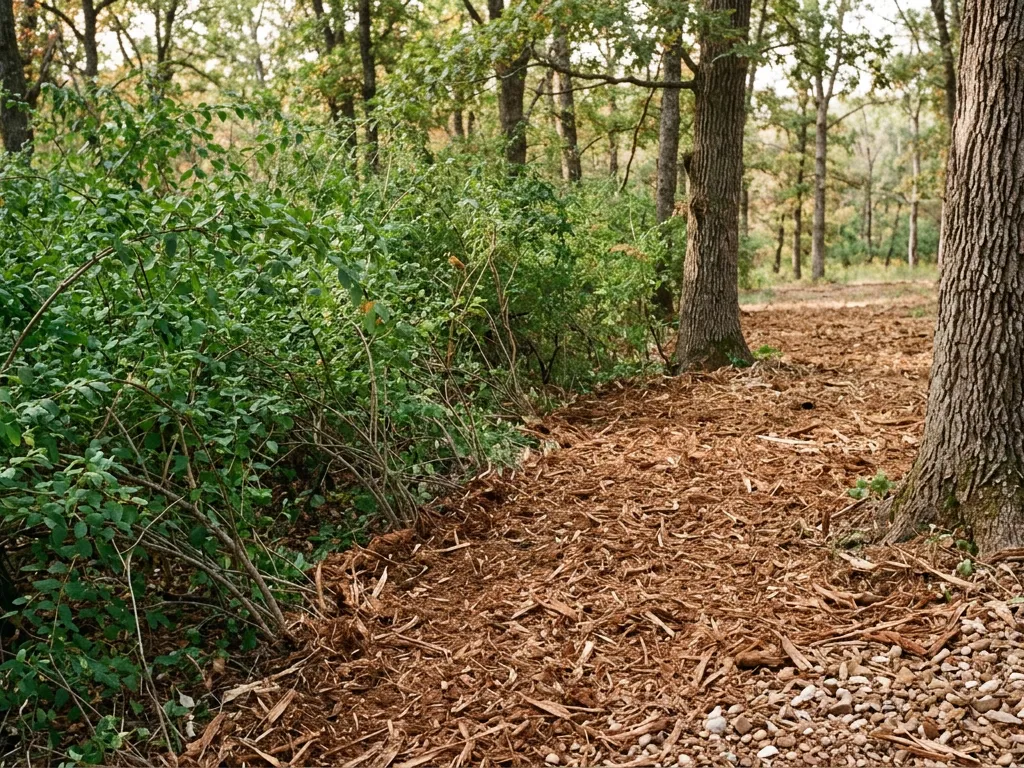
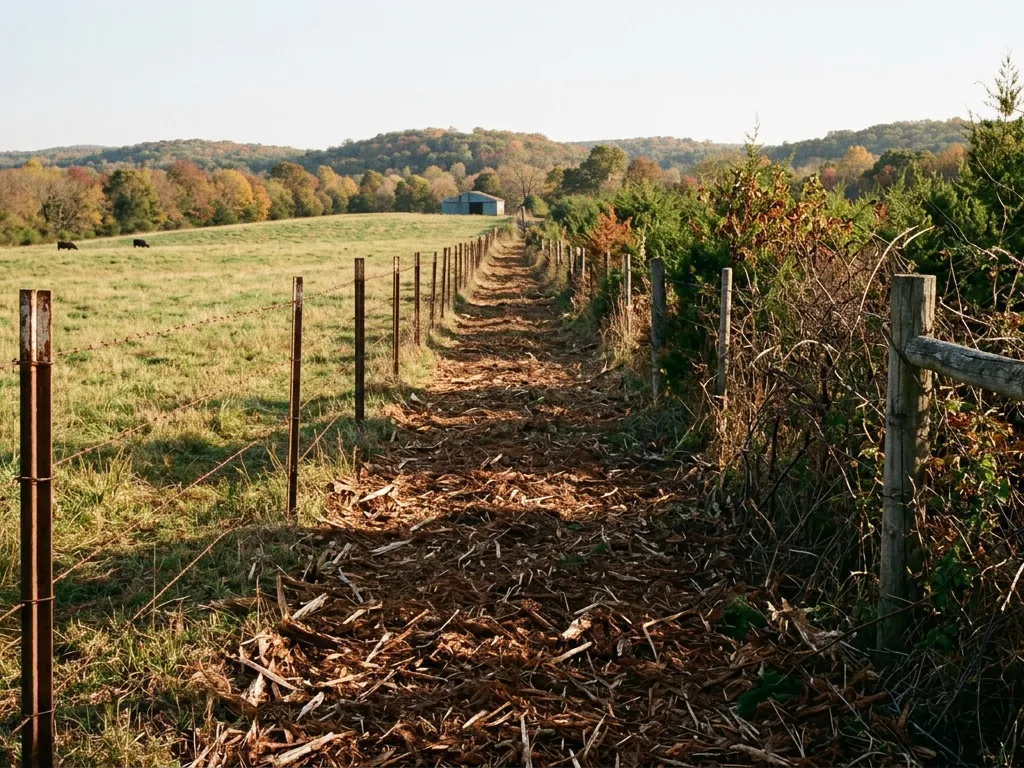
The Fish and Wildlife Service describes Indiana bat maternity roosts as the peeling bark of dead or dying trees, often in canopy gaps, along fence lines and at wooded edges. Those are the places most clearing starts: an overgrown fence line, a woods edge, dead trees standing in a pasture. Shagbark hickories and snags with loose bark are the obvious candidates.
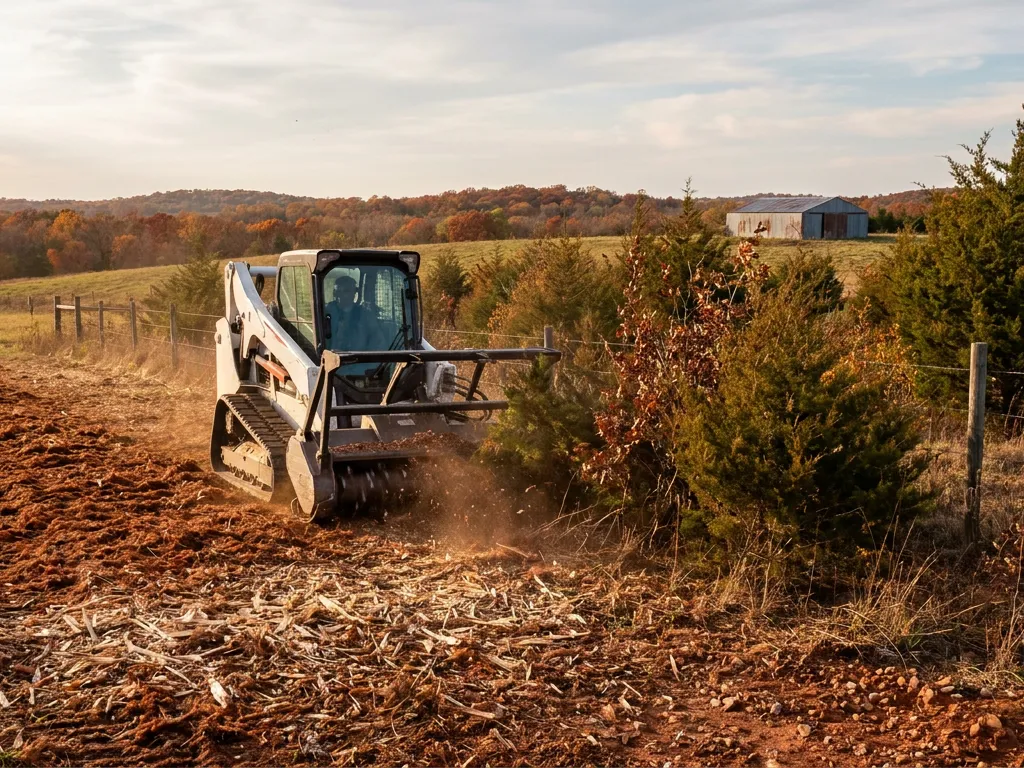
Mulching brush, honeysuckle and cedar saplings is a different job from felling large trees with loose bark or cavities. Underbrush clearing that leaves the big trees standing is a different job from tree clearing that takes them down for a building site or a pasture.
Caves, sinkholes and the gray bat
The gray bat roosts in caves, so the Missouri key looks at the ground as well as the trees. It asks whether a project will affect a cave or mine, its entrances or other openings such as sinkholes, or the hydrology feeding them, and it flags projects within 200 feet of a known cave. Greene County's Design Standards (1999) already require a 25 ft buffer of existing ground cover around a sinkhole's flooding area in moderate hazard areas; see sinkholes and land clearing in Greene County.
A practical cutting plan for Springfield-area land
- Federal money or a federal permit in the project: ask the agency for its window before booking any tree work, and expect the April 1 to October 15 period to matter for suitable roost trees.
- Private land, no federal involvement: cutting large trees with loose bark, cavities or dead tops outside April 1 to October 15 is the lower-risk choice. Around Rogersville, where USDA maps frequently ponded soil, and Fair Grove, where the creek-bottom soil is frequently flooded, pick firm or frozen days for that work.
- Clearing many acres of woods: the acreage thresholds apply even in winter, and the Missouri Ecological Services Field Office offers landowners help with protected species questions.
- Near caves or sinkholes: keep the buffer and talk to the county first. Acreage clearing covers splitting big tracts into seasons.
Taking big trees off your land? Describe the trees, the acreage and any federal program involved, and settle the cutting season before booking machines.
Call (417) 759-5914Questions about a piece of ground near Springfield? Call (417) 759-5914
Sources
- U.S. Fish and Wildlife Service, Missouri Determination Key Standing Analysis (Version 2.0, August 2025)
- U.S. Fish and Wildlife Service, Tree Removal Thresholds and No Effect Zones for Missouri Bats
- U.S. Fish and Wildlife Service, Indiana bat
- U.S. Fish and Wildlife Service, Northern long-eared bat
- U.S. Fish and Wildlife Service, Missouri Ecological Services Field Office
- Greene County Resource Management, Environmental Division
Frequently Asked Questions
Tree Clearing and Bats in Missouri: When to Cut: Questions
Is it illegal to cut trees in summer in Missouri because of bats?
We found no state or county season for private land. Federal reviewers use April 1 to October 15 on projects with federal funding or permits, and the federal take prohibition for listed bats still applies to private projects.
When can you cut trees for Indiana bats in Missouri?
The Fish and Wildlife Service's Missouri key treats removing suitable roost trees from April 1 through October 15 as a possible effect, so funded projects usually cut outside that period.
Does the bat rule apply to private landowners?
Section 7 consultation applies to projects with a federal nexus. Private projects without one are still subject to the section 9 take prohibition.
What trees do Indiana bats roost in?
Mostly dead or dying trees with peeling bark, often in canopy gaps, along fence lines and at wooded edges, according to the Fish and Wildlife Service.
Does mulching brush affect bats?
Mulching brush and saplings is a different job from felling large trees with loose bark or cavities, which bats use for roosts.