Land Clearing Pros of Springfield MO: Forestry Mulching vs Bush Hogging in Springfield
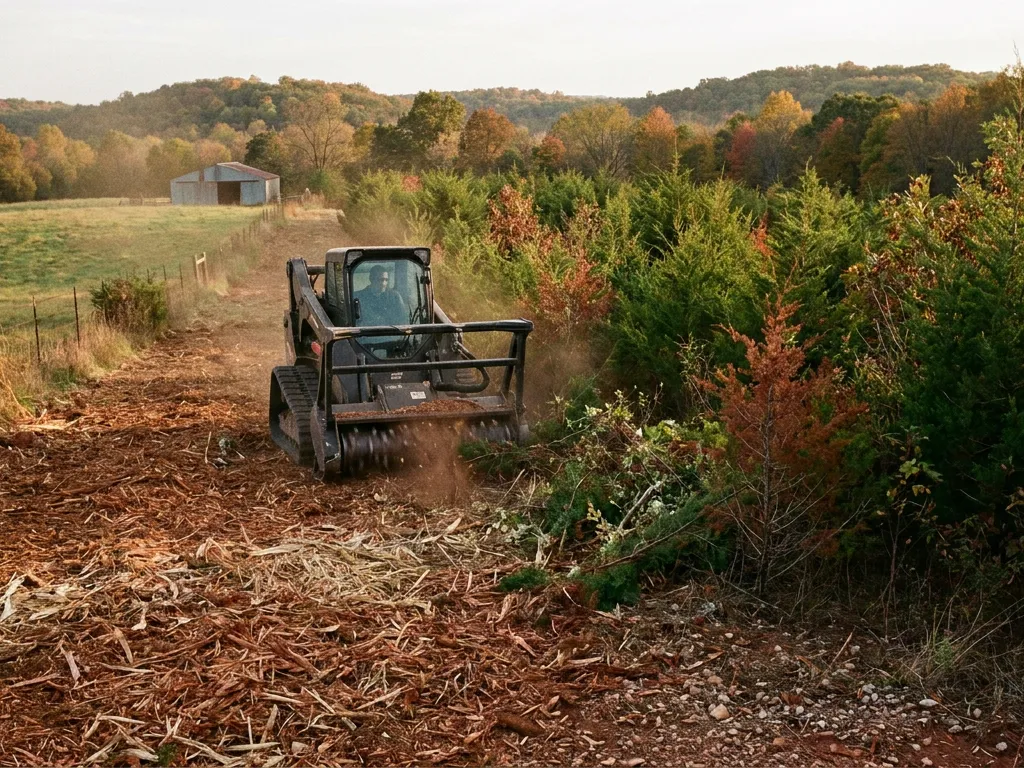
Land Clearing Pros of Springfield MO publishes this comparison because the two jobs get mixed up on overgrown ground around Springfield. A rotary cutter pulled behind a tractor, the machine most people call a bush hog, mows grass, weeds and light brush down to stubble. A forestry mulcher grinds standing brush, cedar and saplings into a layer of chips. One maintains open ground; the other reclaims ground that has already been lost, and the price gap between them reflects that.
Two machines built for different growth
| Bush hogging | Forestry mulching | |
|---|---|---|
| Machine | Rotary cutter pulled behind a farm tractor | Tracked skid steer or mulching tractor with a drum or disc head |
| Best on | Grass, weeds, briars and light brush | Brush, cedar, honeysuckle and saplings |
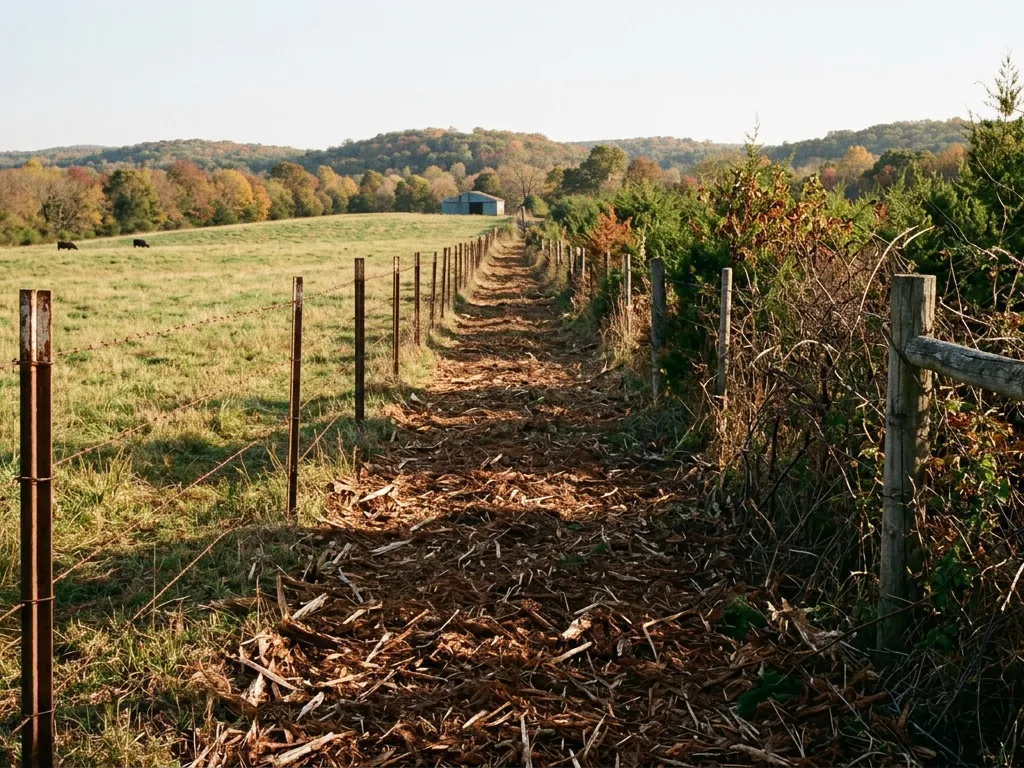
| What is left | Cut stubble and scattered clippings | A layer of chips over the soil; a drum head grinds stumps roughly to ground level |
| Roots | Left in the ground | Left in the ground |
| How often | Once or twice a year to keep ground open | Usually once, to reclaim the ground |
The practical line between them is stem size. A bush hog is a mower: it spins blades under a steel deck and cuts what it can push over. Once cedar and hardwood saplings are too thick for it to push over, the cutter leaves them standing and the job has become mulcher work. Ask what the cutter is rated for.
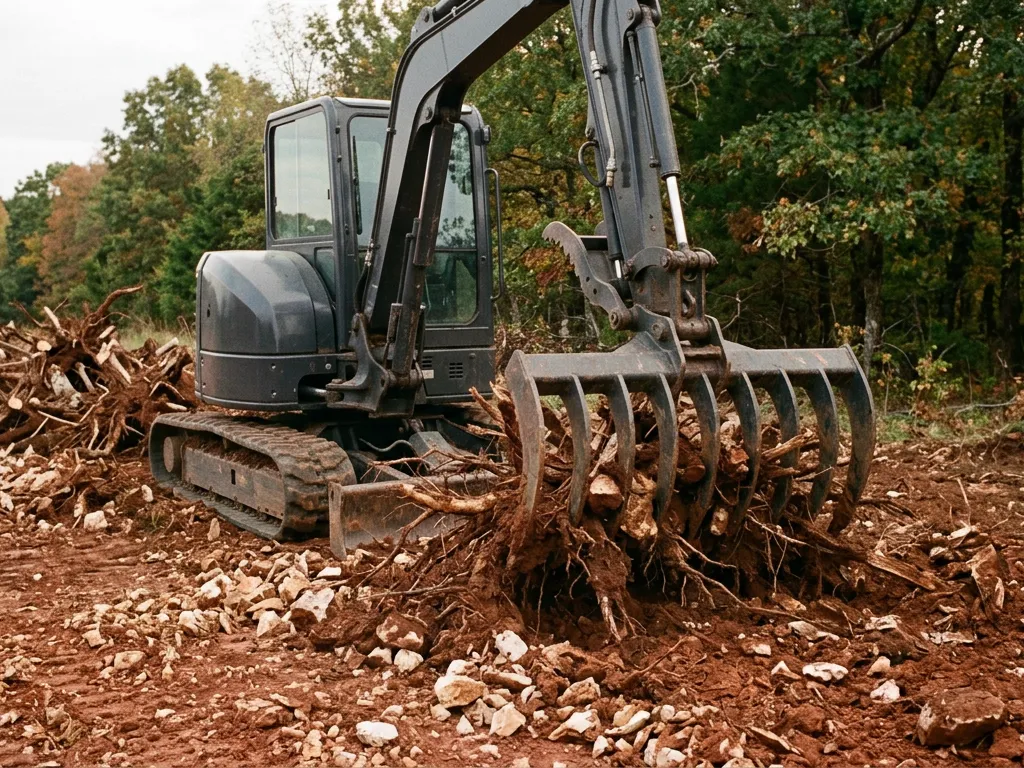
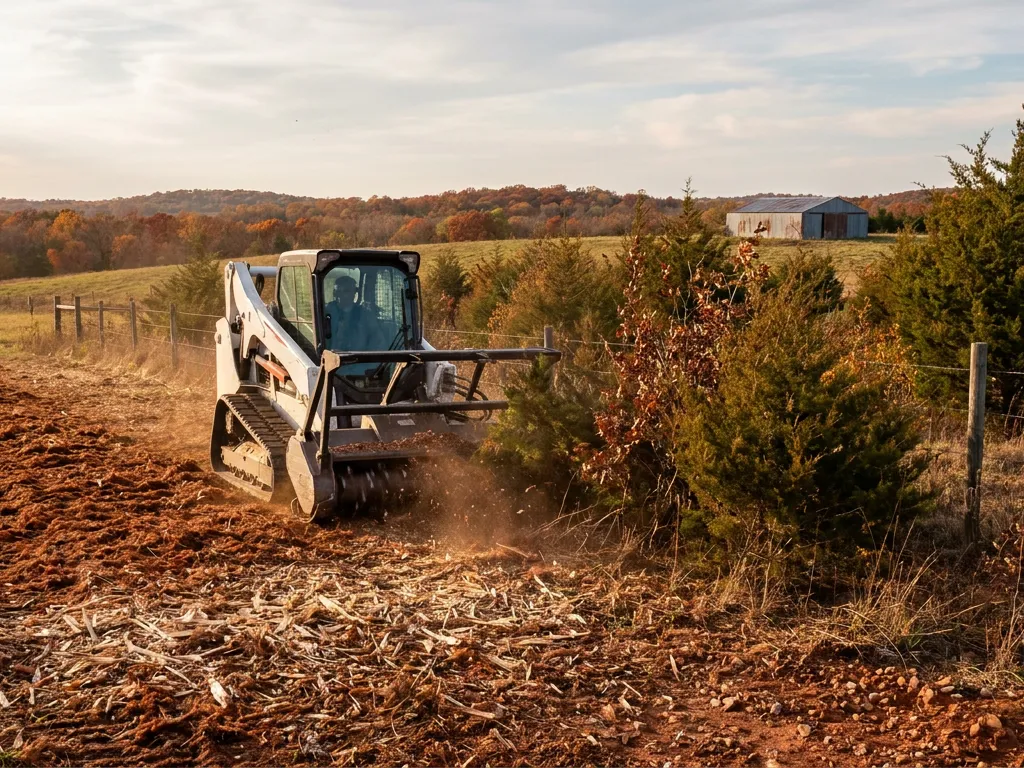
A forestry mulcher is one machine, usually a tracked skid steer or a purpose-built mulching tractor carrying a toothed head across the front. It cuts and grinds standing brush and trees and spreads the result as mulch in one pass. Nothing is piled, hauled or burned, and the topsoil stays where it was.
When a bush hog is enough
Bush hogging is the right call on pasture that has been grazed or hayed and only needs topping, on field edges where weeds and briars are knee high, and on ground that was mulched a season or two ago and now has hardwood sprouts and honeysuckle coming back. On that growth it is the cheapest machine time there is, with nothing to clean up afterward.
It stops being the answer when the growth has outrun it. Cedar spreading in from a fence row, sumac thickets and saplings in the second or third year of a field gone wild will not come down to a mower.
When the ground needs a forestry mulcher
The signs are plain from the gate: cedar and sumac spreading in from a pasture edge, brush grown up through a fence, and woods you cannot see into. A skid steer mulcher typically covers 1 to 3 acres a day depending on density, and a larger mulching tractor can cover up to 15 acres a day on open ground (HomeGuide, forestry mulching guide).
The chip layer it leaves holds soil on slopes and suppresses regrowth for a season or two. Tracked machines also float over wet silt loam and grip on the slopes along creeks, where a tractor and cutter can slide or rut. See forestry mulching for how the heads work and what each one leaves behind.
What each one costs around Springfield
| Job | Published range | Source |
|---|---|---|
| Mowing brush or overgrown pasture, per hour | $50 to $175 per hour | MU Extension G302 |
| Mowing pasture or CRP ground, per acre | $12 to $25 per acre | MU Extension G302 |
| Forestry mulching, per acre | $400 to $800 per acre | HomeGuide, 2023 |
| Forestry mulching, per hour | $125 to $300 per hour | HomeGuide, 2023 |
The mowing figures are Missouri survey numbers: University of Missouri Extension's Custom Rates for Farm Services in Missouri (G302, revised March 2026) reports rates charged or paid in 2025. Only seven responses covered brush mowing and five covered pasture mowing, and the guide itself warns that low response counts limit confidence. Treat them as a guide, not a quote.
The mulching bands are national averages. Density, stem size, slope, rock and the distance the machine travels move the number, and small jobs often carry a minimum charge of $400 to $600 minimum plus mobilization of $150 to $300 per visit. Per acre, mulching costs more because it removes growth a mower cannot touch. Ask for a written price that names the method, the acreage and what is left on the ground when the machine leaves. Bush hogging has its own page with what moves a mowing price.
Not sure whether your ground still mows or now needs a mulcher? Describe the tallest growth and the acreage, and ask for a written price that names the method.
Call (417) 759-5914Using both on the same ground
Most reclaimed pasture ends up needing both, in order. The mulcher goes first, once, to take out the cedar, sumac and saplings. The bush hog follows once or twice a year to keep resprouts down. Cedar does not resprout from a cut stump, but hardwoods and honeysuckle do, so the mowing schedule matters most on ground that was mostly hardwood brush. On pasture, overseeding fescue or a clover mix into the thin mulch in early fall closes the ground fastest. Pasture reclamation covers the whole sequence.
Ground conditions decide when either machine should run. On the fragipan soils mapped around Republic and Strafford, the ground stays soft from late winter into spring and heavy equipment ruts it, so a tracked mulcher can often work when a tractor and cutter should wait. Around Fair Grove, the creek-bottom Cedargap soil that USDA maps there is frequently flooded, which makes dry weather the scheduling rule for both.
Neither usually triggers a county grading permit
Greene County requires a grading permit for any non-agricultural land disturbance and defines land disturbance as activity that disturbs the root zone of existing vegetation, with the example that clearing trees with a dozer needs a permit and clearing with a chainsaw does not. Mowing leaves the root zone alone, and a mulcher that cuts above ground and leaves the roots is much closer to the chainsaw case than the dozer case. Christian County uses the same root-zone definition for its Soil Erosion Control Permit.
That is a reason to confirm, not a promise. Normal farming activity is generally outside the county permits; confirm with the county if the ground is being reshaped, if stumps are ground below grade, or if the work is near a sinkhole or in a mapped floodplain.
Choosing between them
- Grass, weeds and briars on open pasture: bush hog
- Saplings too thick for a bush hog to push over: mulch
- Cedar spreading in from the fence line: mulch once, then mow
- Ground mulched a season or two ago with sprouts coming back: bush hog
- Woods you want to walk or hunt through: mulch (see underbrush clearing)
- Budget is tight on a big tract: mulch the worst ground first, and mow the rest
Questions about a piece of ground near Springfield? Call (417) 759-5914
Frequently Asked Questions
Forestry Mulching vs Bush Hogging in Springfield: Questions
Is a brush hog the same as a forestry mulcher?
No. A brush hog, or bush hog, is a rotary mower pulled behind a tractor for grass, weeds and light brush. A forestry mulcher grinds brush, cedar and saplings into chips with a toothed drum or disc head.
How much does bush hogging cost in Missouri?
MU Extension's G302 survey reports $50 to $175 per hour for mowing brush or overgrown pasture and $12 to $25 per acre for mowing pasture or CRP ground, from few responses, so treat it as a guide.
Is forestry mulching worth it over mowing?
When saplings and cedar are too thick for a bush hog, yes, because mowing cannot remove them. On open pasture that only needs topping, mowing is the cheaper tool.
Will brush grow back after mulching?
Hardwoods and honeysuckle resprout from the roots, so plan on bush hogging once or twice a year afterward. Cedar does not resprout from a cut stump.
Does bush hogging need a permit in Greene County?
Mowing does not disturb the root zone, which is the county's permit trigger. Confirm if the ground is being reshaped.