
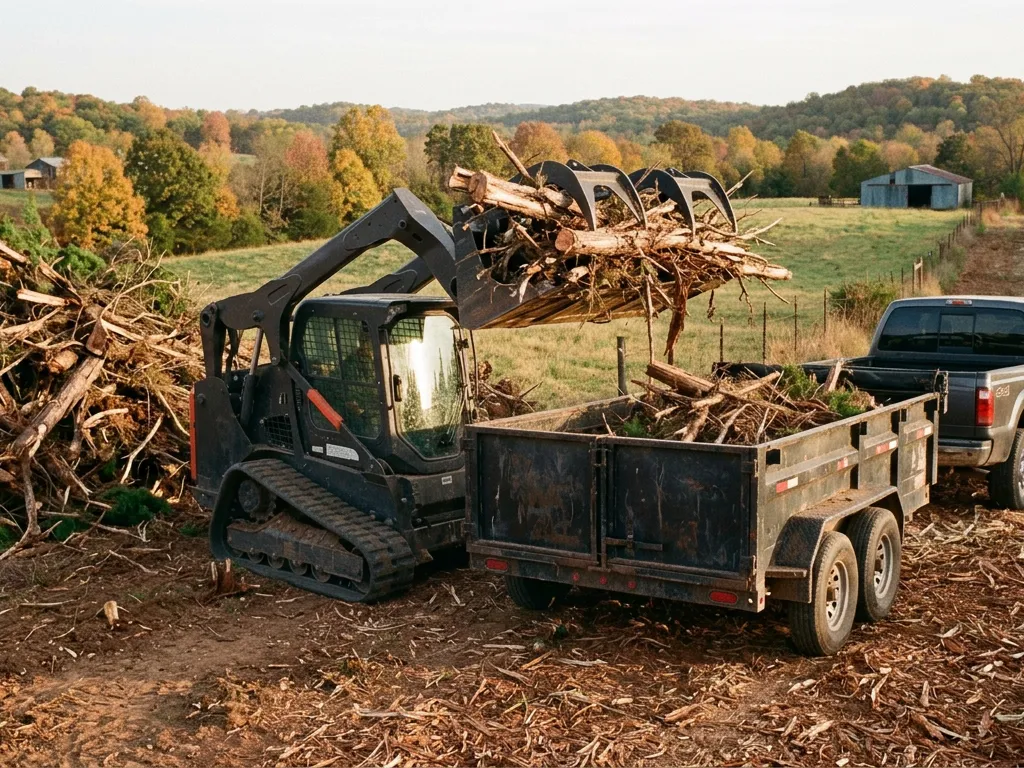
Land Clearing Pros of Springfield MO: Storm Debris Cleanup in Springfield, MO
After a storm the debris on the ground is the easy part to see; the leaning trees, hung limbs and torn-up roots are the part to plan around.
- Springfield and 20 miles around
- Licensed, insured local contractors
- Typical price ranges on every page
- Ask for a written price first
- County permit rules explained
Land Clearing Pros of Springfield MO explains storm debris cleanup for homes, farms and acreage around Springfield, MO: limbs down across a yard, trees uprooted along a fence or a drive, and brush piled where wind and water left it. The job is cutting the wood into pieces that can be moved, then chipping it, hauling it or burning it where the rules allow, and dealing with the stumps and root holes that uprooted trees leave behind.
Hauling storm debris runs $75 to $250 per trip per trip in HomeGuide's tree debris guide; leave a pasture full of downed limbs through a growing season and briars grow up through them, so the cleanup becomes brush removal at $800 to $1,800 per acre.
What Storm Cleanup Covers Around Springfield
Storm cleanup here ranges from a yard full of broken oak limbs to a fence row of uprooted cedar and a woods lot with trees down across a lane. The work starts with sorting: wood on the ground, which is the cleanup itself; trees still standing but broken or leaning, which is tree work; and anything touching a power line, which is the utility's job before anyone cuts. Keep clear of any line a tree has brought down and report it to the utility first.
Storm Debris Removal Prices and the Rush Premium
HomeGuide's tree debris guide prices hauling storm debris per trip, and its brush pile guide prices pickup loads and on-site chipping by the hour. HomeGuide's tree removal guide notes that emergency removal on short notice often costs 2 to 3 times the standard rate. Debris already lying on the ground is rarely an emergency, so getting two written prices is usually worth the wait. Ask whether a quote covers cutting, loading, chipping and the disposal fee, or only some of them.
$75 to $250 per trip
Tree or storm debris removal, per trip. The size of the trunks, how much is hung up or leaning, whether the wood is chipped on site or hauled, and how far the truck goes move the number most.
| Job | Typical range | Figure from |
|---|---|---|
| Tree or storm debris removal, per trip | $75 to $250 per trip | HomeGuide, 2025 |
| Brush hauling, per pickup load (2 to 4 cu yd) | $150 to $200 per load | HomeGuide, 2026 |
| Wood chipping, per hour | $100 to $150 per hour | HomeGuide, 2026 |
| Tree removal, per tree | $400 to $1,200 per tree | HomeGuide, 2025 |
| Stump grinding, first stump | $100 to $250 for the first stump | HomeGuide, 2026 |
Sorting a Storm Cleanup Before Anyone Cuts
Photograph the damage before anything moves, for any insurance claim. Then sort the wood: limbs for chipping, trunks for firewood or hauling, and brush for a pile or a load. A tree with its roots torn out leaves a stump and a hole; stump grinding, or pulling the root plate and filling the hole, finishes it. On large spreads of downed timber, debris removal with a grapple loader moves the wood faster than hand loading, and on acreage a forestry mulcher can grind the brush in place.
Springfield Brush Drop-Off and Burning Rules
The City of Springfield's Yardwaste Recycling Center, at 3790 S. Farm Road 119 in Brookline, is the city's only drop-off for residential brush in pickup loads and larger. It charges a fee based on load size, takes limbs cut to 10 feet long and up to 10 inches across loose, and sends larger limbs and root balls to the Springfield Sanitary Landfill. Burning inside city limits needs an open burning permit, $131 on the city's City Air Permits page, which covers trunks, limbs, brush and untreated wood from the site. Outside city limits the rules differ, and the open burning rules for land clearing cover both.
Soaked Ground and Heavy Machines
Ground after a storm is often soaked, and loaders and trucks rut it. Around Rogersville, the soil mapped at the town's center point is a Splitlimb silt loam that ponds frequently, and silt loam across the area turns soft when wet. Letting it dry before a machine drives across a lawn or pasture saves a second repair job. Where debris has to move sooner, limbs can be carried by hand to a drive or road and chipped there, which keeps the machines off soft ground.
Storm Damage That Needs More Than a Rake
- Limbs too big to drag to the curb
- A tree uprooted with its root plate standing up
- Trunks down across a fence, lane or drive
- Broken limbs still hanging in the canopy
- A brush pile bigger than a pickup can carry
- Downed trees scattered through a pasture or woods
Plan Storm Debris Cleanup in Springfield
Call and describe what came down, where it lies and whether anything is still hanging or leaning, and ask how to plan the cleanup.
Call (417) 759-5914Storm Debris Cleanup Available In
Springfield and the qualifying towns inside the 20-mile service area.
Frequently Asked Questions
Storm Debris Cleanup Questions in Springfield
How much does storm debris removal cost?
HomeGuide's tree debris guide puts storm and tree debris removal at $75 to $250 per trip. Brush hauling runs $150 to $200 per load per pickup load, and chipping on site $100 to $150 per hour.
Where can I take storm brush in Springfield?
The city's Yardwaste Recycling Center in Brookline takes residential brush in pickup loads and larger for a fee based on load size. Limbs must be cut to 10 feet and up to 10 inches across; larger limbs and root balls go to the Springfield Sanitary Landfill.
Does emergency tree removal cost more?
Yes. HomeGuide's tree removal guide notes that emergency removal on short notice often runs 2 to 3 times the standard rate. Wood already on the ground can usually wait for written prices.
Can I burn storm debris in Springfield?
Inside city limits you need an open burning permit, $131 on the city's City Air Permits page, which covers trunks, limbs, brush and untreated wood from the site and excludes leaves, refuse and trade waste.
What do I do with an uprooted tree's root ball?
Grind the stump and root plate down, or pull it and fill the hole. In Springfield, root balls are not accepted at the Yardwaste Recycling Center and go to the Springfield Sanitary Landfill instead.