Land Clearing Pros of Springfield MO: Is Forestry Mulching Worth It in Springfield?
Land Clearing Pros of Springfield MO wrote this for property owners around Springfield weighing a forestry mulching quote against full clearing. The short answer: forestry mulching is worth it when the ground will be used rather than built on, because it costs a fraction of moderate or heavy clearing and leaves the soil covered. It is not worth it where a slab, footing or drive is going in, and it only stays worth it if someone deals with the regrowth.
The per-acre math
| Method | Typical published range | Source |
|---|---|---|
| Forestry mulching | $400 to $800 per acre | HomeGuide forestry mulching guide |
| Forestry mulching, light to dense growth | $400 to $2,000 per acre | HomeGuide forestry mulching guide |
| Moderate clearing: thicker brush, medium trees | $2,500 to $4,500 per acre | HomeGuide land clearing guide |
| Heavy clearing: dense woods, large trees | $4,500 to $8,000 per acre | HomeGuide land clearing guide |
| Grading a small, mostly level home site | $2,000 to $5,000 | HomeGuide land clearing guide |
The two guides were written in different years, so treat the comparison as a rough one. Even so, the gap is wide: the top of the mulching range for dense growth still sits below the bottom of the moderate clearing range. Full clearing also leaves debris to pile, burn or haul at $150 to $200 per load, while a mulcher leaves its debris on the ground as mulch.
What you are paying for
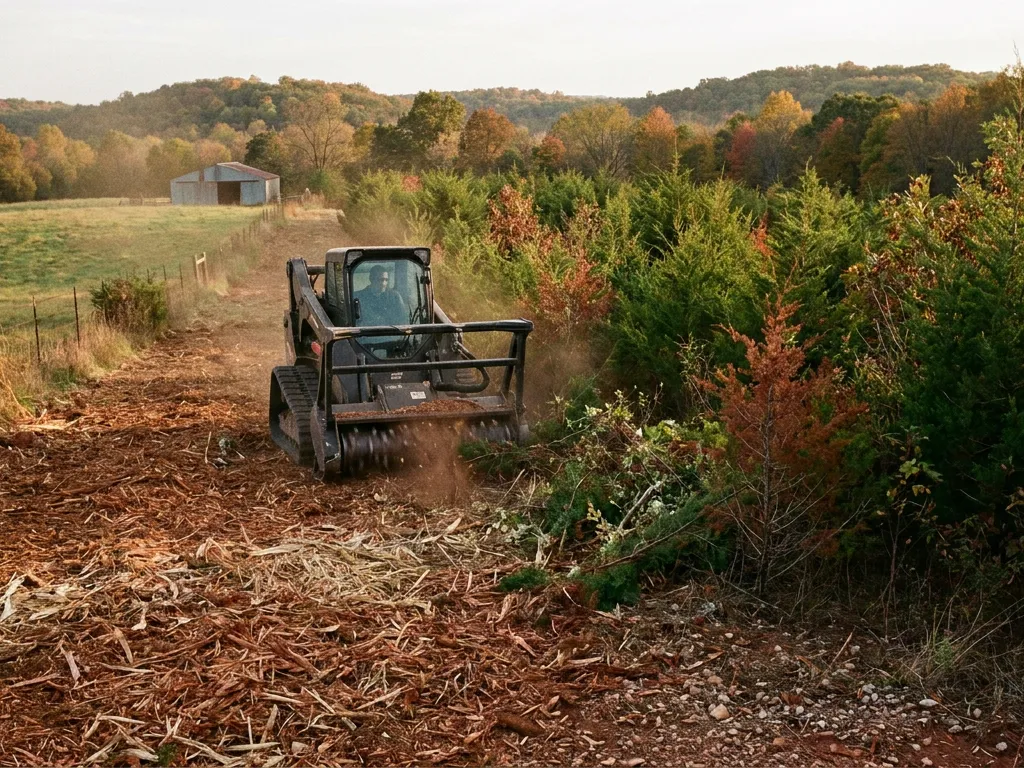
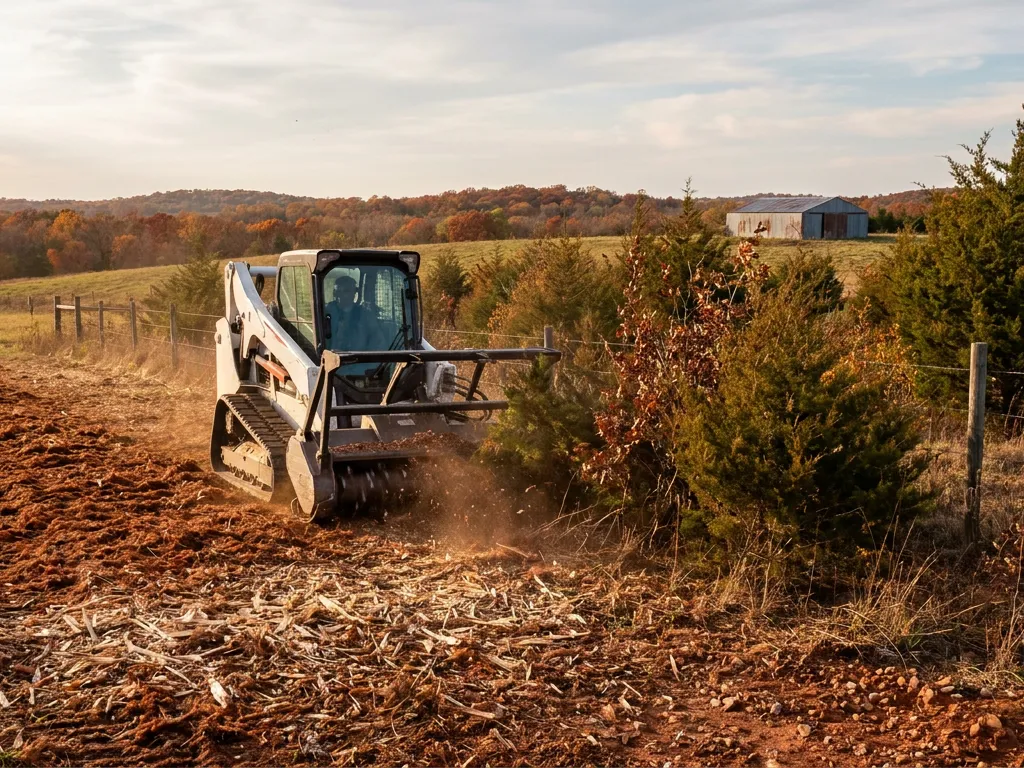
A forestry mulcher cuts and grinds standing brush and small trees and spreads them as a mulch layer in one pass. The roots and topsoil stay where they are. HomeGuide puts a skid steer mulcher at 1 to 3 acres a day, and a larger tractor unit at up to 15, so a day rate of $1,000 to $2,500 per day covers very different ground depending on the machine and the growth.
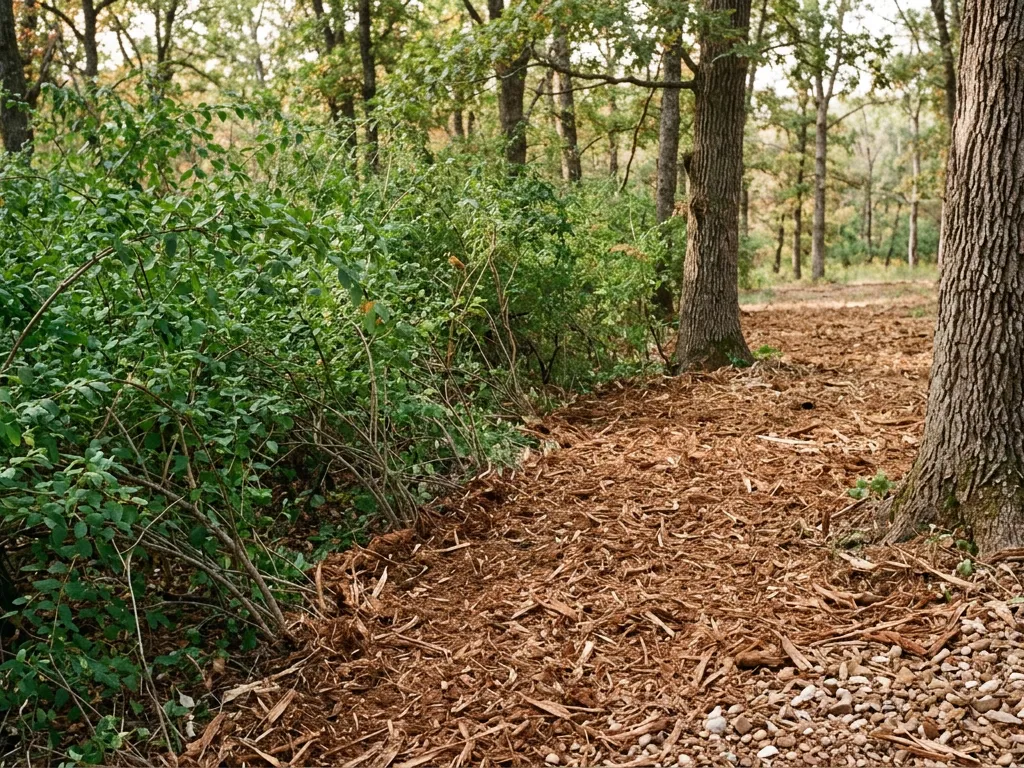
The mulch layer earns its keep after the machine leaves. With the roots and topsoil left in place, the mulch holds the soil while grass or groundcover comes back. Fully cleared ground is bare until it is seeded or built on, and bare silt loam on a slope erodes in the first heavy rain unless it is covered quickly. On the sloping, gravelly Goss soils mapped at the centers of Ozark and Sparta, that covered surface is part of what the mulching price buys.
Small jobs carry fixed costs. Mobilization runs $150 to $300 per visit per visit and a typical minimum charge is $400 to $600 minimum, so a quarter acre of brush can cost nearly as much as a full acre of light growth. Bundle the fence row, the trail and the field edge into one visit if you can.
See forestry mulching for the service itself, and the forestry mulching vs land clearing post for what each method leaves behind.
When forestry mulching is not worth it
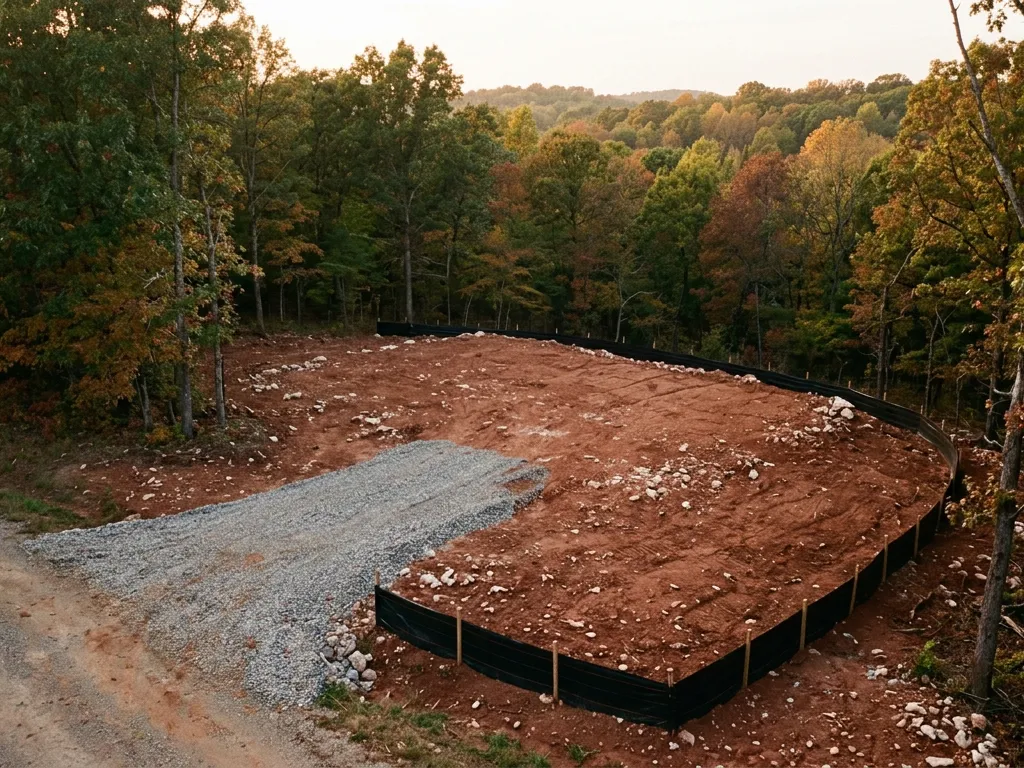
Forestry mulching is the wrong buy anywhere something will be built. Roots left under a slab, a footing or a driveway rot and settle, so the footprint has to be grubbed and graded anyway. Mulch that pad first and you pay for mulching, then pay again for a dozer or excavator at $1,200 to $2,500 per day to pull the roots and $2,000 to $5,000 to grade. The right split on a rural home site around Nixa or Willard is home site clearing with grubbing on the pad, drive and septic area, and mulching on the rest.
It is also not worth it where the plan is to till. A field that will be plowed needs the roots raked out, not ground over. And where the growth is still grass and light brush, mowing may be all it needs: University of Missouri Extension's 2026 custom rates guide reports $50 to $175 per hour for mowing brush or overgrown pasture, from only a handful of responses. The bush hogging page covers that end of the scale.
Not sure which parts of your land suit mulching? Describe what will happen on each area, and ask for a written price that splits mulching from grubbing.
Call (417) 759-5914Regrowth decides the real cost
Mulching cuts everything off at the ground, but it does not kill everything. Hardwoods and bush honeysuckle resprout from the roots. Cedar does not resprout from a cut stump, which is why cedar-choked pasture is the clearest case for a mulcher.
For honeysuckle, the Missouri Department of Conservation's control page describes applying a 20 percent glyphosate solution to cut stumps right after cutting, notes that some resprouting may still need a follow-up treatment, and says any treatment should be rechecked in following years. On land outside high-quality natural areas, it also describes a 1.5 percent glyphosate foliar spray just after the shrubs bloom in June for mature plants. Without one of those steps, the thicket comes back.
Budget the follow-up when you compare quotes. A mulching job with a regrowth plan, a mowing pass the next year or spot treatment on the sprouts, is still cheaper than heavy clearing. A mulching job with no plan can mean paying for the same acre again.
Permits: mulching versus grubbing
Greene County requires a grading permit for any non-agricultural land disturbance, which it defines as activity that disturbs the root zone of existing vegetation; its example is that clearing trees with a dozer needs a permit and clearing them with a chainsaw does not. Christian County's soil erosion control permit uses the same test. Full clearing disturbs the root zone by design. Mulching that leaves roots in place usually does not, but confirm with the county for your property, particularly near sinkholes or mapped floodplain, where a floodplain development permit applies to any activity.
Inside Springfield, the city's land disturbance permit applies to sites disturbing one acre or more. Greene County's design standards also keep existing ground cover in place within 25 feet of a sinkhole's flooding area in moderate hazard areas, so flag any sinkhole before a machine starts.
Quick verdict by property
- Cedar-choked pasture you want back in grass: worth it, and cedar will not resprout.
- Woods you want open to walk and hunt: worth it, with honeysuckle treatment planned.
- Trails, fence rows and field edges: worth it, bundled into one visit.
- Steep, rocky or creekside ground: worth it, because it keeps the soil covered.
- A house pad, shop pad, drive or septic area: not worth it; grub and grade instead.
- Ground that will be tilled: not worth it; root rake instead.
- Grass with a few small saplings: probably not; mow first.
Questions about a piece of ground near Springfield? Call (417) 759-5914
Frequently Asked Questions
Is Forestry Mulching Worth It in Springfield?: Questions
Is forestry mulching worth the money?
Usually, on land that will be used rather than built on. It runs $400 to $800 per acre against $2,500 to $4,500 per acre for moderate clearing, and it leaves no debris to haul.
Is forestry mulching cheaper than land clearing?
Yes. Even dense mulching at $400 to $2,000 per acre tops out below the low end of moderate clearing at $2,500 to $4,500 per acre, from national cost guides.
Will brush grow back after forestry mulching?
Hardwoods and honeysuckle resprout from the roots and need mowing or herbicide on the sprouts. Cedar does not resprout from a cut stump.
Can I build on mulched ground?
Not directly. Roots left under a slab or drive rot and settle, so the footprint has to be grubbed and graded first.
Does forestry mulching need a permit near Springfield?
The county permits turn on disturbing the root zone. Mulching that leaves roots usually does not, but confirm with Greene or Christian County, especially near sinkholes or floodplain.