Land Clearing Pros of Springfield MO: Selective Clearing vs Clear Cutting Around Springfield
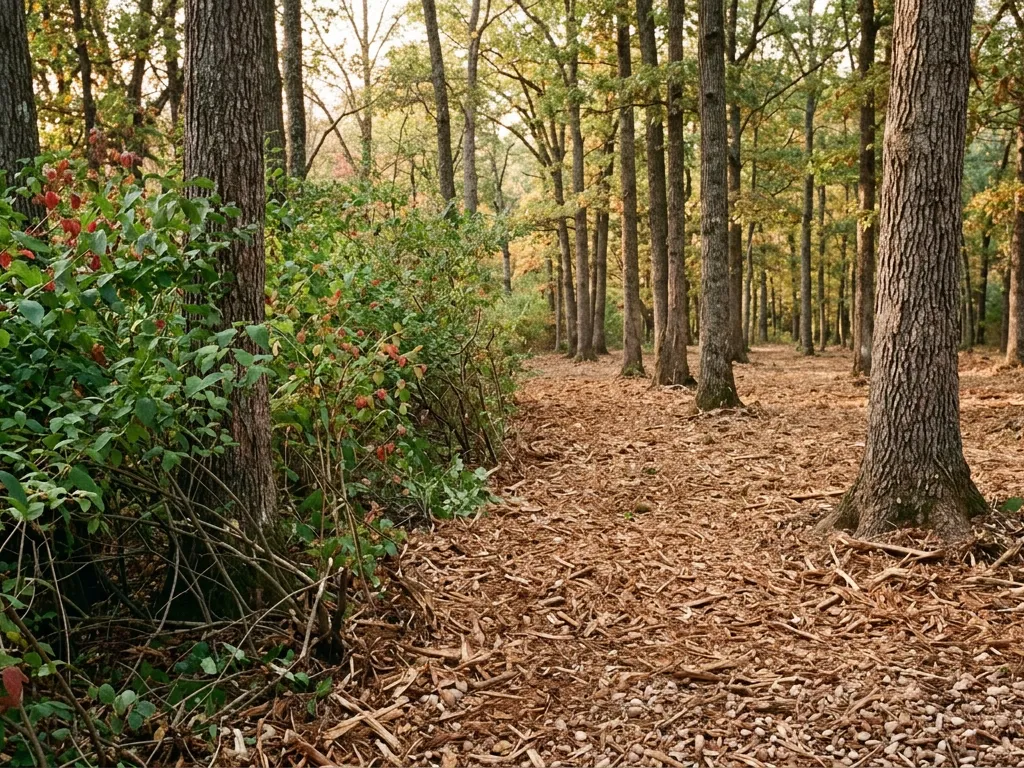
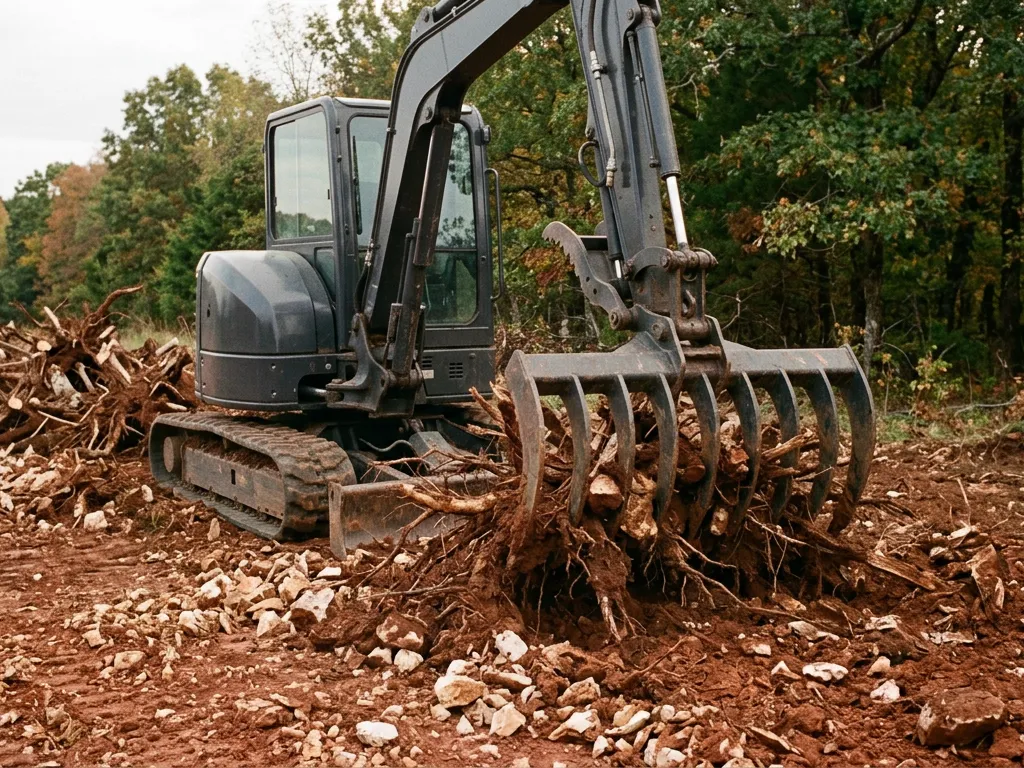
Land Clearing Pros of Springfield MO put this comparison together for property owners around Springfield deciding how much of their woods to take down. Selective land clearing removes the brush, saplings, honeysuckle and cedar under the canopy and leaves the mature oaks, hickories and walnuts standing. Clear cutting takes every tree. The first suits almost any property that will be lived on, hunted or grazed; the second belongs only where something is being built.
Two ways to clear a wooded lot
| Selective clearing | Clear cutting | |
|---|---|---|
| What comes out | Understory brush, saplings, honeysuckle, small cedar, chosen trees | Every tree and shrub |
| What stays | Marked oaks, hickories, walnuts and other keepers | Nothing above ground, often nothing below |
| Typical method | Forestry mulcher and chainsaw | Saws, dozer or excavator, then grubbing |
| Typical published cost | $1,200 to $2,500 per acre for light underbrush work | $2,500 to $4,500 per acre to $4,500 to $8,000 per acre, before debris |
| Debris | Mostly mulched in place | Logs and brush to pile, burn or haul |
| Ground afterward | Covered, shaded, roots intact | Bare soil until seeded or built on |
| County permit | Usually not, when roots stay | Usually yes, once roots are pulled |
What selective clearing looks like in the woods
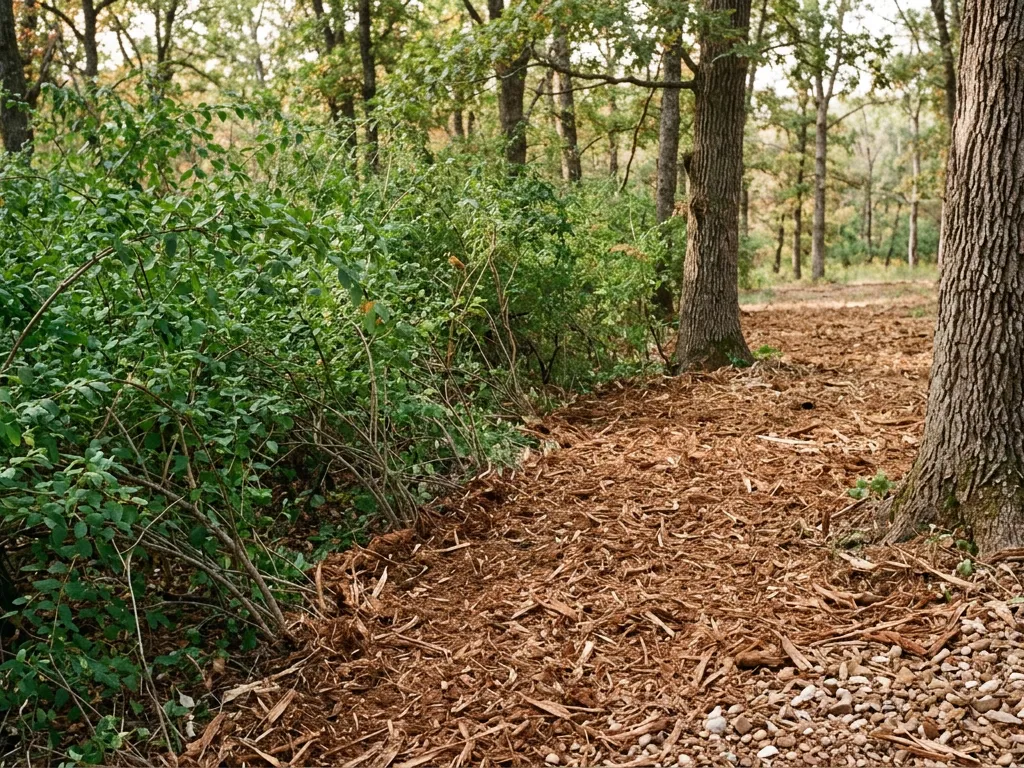
Selective clearing, often sold as underbrush clearing, opens the understory and leaves the canopy. The result is a park-like woods you can see into, walk through and hunt. The work that matters most happens before any machine starts: walking the woods and marking what stays. Healthy oaks, hickories, walnuts and any tree worth keeping get a ribbon. Dead and dying trees near a trail, a house or a fence get flagged to come down. Everything under a set size goes.
Leave some native shrubs and young hardwoods if you want wildlife cover. Clearing to a bare forest floor looks tidy, but a woods with no young trees has nothing to replace the old ones.
Cost difference per acre
Selective work costs more per acre than clearing everything at the same density, because the operator slows down around every keeper. Against clear cutting, though, it is usually far cheaper overall. Large trees left standing are trees nobody has to cut, move or haul.
| Item | Typical published range |
|---|---|
| Light clearing: shrubs, underbrush, small trees | $1,200 to $2,500 per acre |
| Moderate clearing: thicker brush, medium trees | $2,500 to $4,500 per acre |
| Heavy clearing: dense woods, large trees | $4,500 to $8,000 per acre |
| Tree removal, per tree | $400 to $1,200 per tree |
| Stump grinding, per stump | $100 to $400 per stump |
| Brush hauling, per pickup load | $150 to $200 per load |
Clear cutting a wooded lot lands in the moderate or heavy band, then adds stumps, debris and grading. Selective underbrush work sits in the light band, with a few individual trees priced at $400 to $1,200 per tree where they have to come down, and stumps ground at $100 to $400 per stump through stump grinding where they are in the way. Mark the keepers before the quote so the price reflects them, and ask for the selective areas and the cleared areas priced separately.
Want the brush gone and the oaks kept? Mark the trees that stay, then ask for a written price that separates selective areas from any cleared footprint.
Call (417) 759-5914Cedar glades: the clearest case for selective work
Some of the ground most worth protecting is not woods at all. MDC's Conservationist magazine says glades are scattered through much of southern Missouri, and that chert glades have been found only in southwest Missouri and northwest Arkansas. The Missouri Department of Conservation describes glades as rocky openings in forested areas, with exposed bedrock such as limestone or dolomite, native prairie grasses and wildflowers, and often more than 100 plant species on a healthy glade. MDC says many glades on private land are overgrown with eastern red cedar, and ties that to continuous grazing and a lack of periodic fire.
On a glade the right answer is to take the cedar and keep everything else. MDC's glade page describes cutting heavy cedar with a chainsaw and letting it cure for a year before burning, and warns that burning several cured cedars together can produce a fire that damages nearby trees. It also suggests asking a local MDC resource forester, wildlife management biologist or private land conservationist about prescribed fire and whether the cedar logs have market value. Cedar tree removal covers the cedar side on ordinary pasture and woods.
Sinkholes set their own buffer
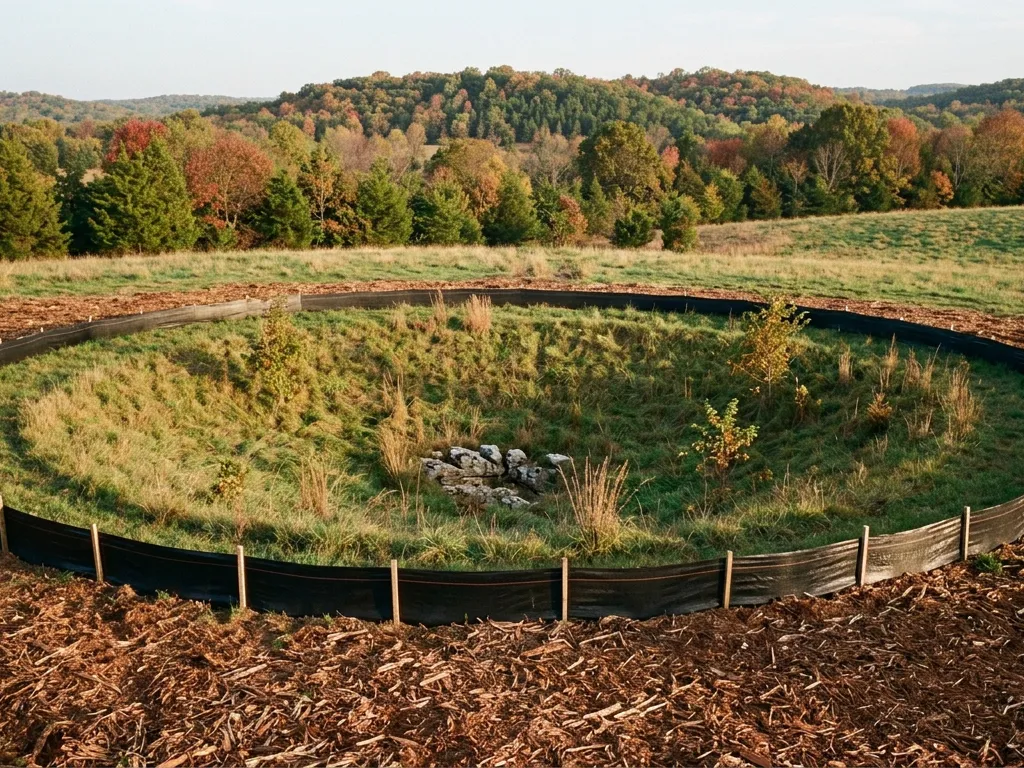
Greene County's design standards say existing ground cover shall not be removed within 25 feet of a sinkhole's flooding area in moderate hazard areas, with a silt barrier around the outer edge of that buffer. Where water reaches the sinkhole as sheet flow, the standards call for a permanent vegetative buffer at least 25 feet wide. The same standards prohibit heavy construction equipment in virgin sinkholes, and prohibit pesticide use within 25 feet of the rim unless it follows a management plan the county stormwater engineer has approved, which matters if the plan includes herbicide on cut stumps.
That makes selective clearing the default near a sinkhole: flag the buffer on the ground, clear around it, and leave its cover alone. The Greene County sinkholes page explains how the flooding area is measured.
Protecting the trees you keep
Oak roots spread well beyond the drip line and sit shallow in the silt loam over the fragipan that underlies much of the area, including around Battlefield and Nixa. Tracked machines spread their weight, but repeated passes on wet ground still compact soil over the roots. Ask for the woods to be worked when the ground is firm, the mulching head kept off the bark, and no deep mulch piled against trunks.
If any larger trees are coming down, read tree clearing and bats in Missouri before setting a date.
When clear cutting is the right call
- A house, shop, drive, pond or septic field is going where the trees stand: clear and grub that footprint through tree clearing, and keep the rest selective.
- The trees are mostly dead or storm-broken and nothing worth keeping is left.
- The ground is being turned back to tilled cropland.
Greene County and Christian County both use the same example for their permits: clearing trees with a dozer needs a grading or soil erosion control permit, clearing them with a chainsaw does not. Clear cutting followed by grubbing disturbs the root zone, so settle the permit before work starts.
Questions about a piece of ground near Springfield? Call (417) 759-5914
Frequently Asked Questions
Selective Clearing vs Clear Cutting Around Springfield: Questions
What is selective clearing?
Removing the brush, saplings, invasive shrubs and chosen trees while leaving the mature trees you mark. Underbrush clearing is one form of it.
Is selective land clearing more expensive than clear cutting?
Per acre it is slower than clearing everything at the same density, but overall it is usually cheaper: light clearing runs $1,200 to $2,500 per acre, while clearing dense woods runs $4,500 to $8,000 per acre before debris.
Can I clear the cedar off a glade?
Yes. MDC's glade page describes cutting cedar with a chainsaw and curing it a year before burning, and MDC staff can advise on prescribed fire.
How close to a sinkhole can I clear?
Greene County's design standards keep existing ground cover within 25 feet of a sinkhole's flooding area in moderate hazard areas, with a silt barrier around the buffer.
Does selective clearing need a permit?
Usually not when roots stay in the ground. Greene and Christian counties say chainsaw clearing does not need their permit and dozer clearing does.