Land Clearing Pros of Springfield MO: Forestry Mulcher vs Stump Grinder in Springfield
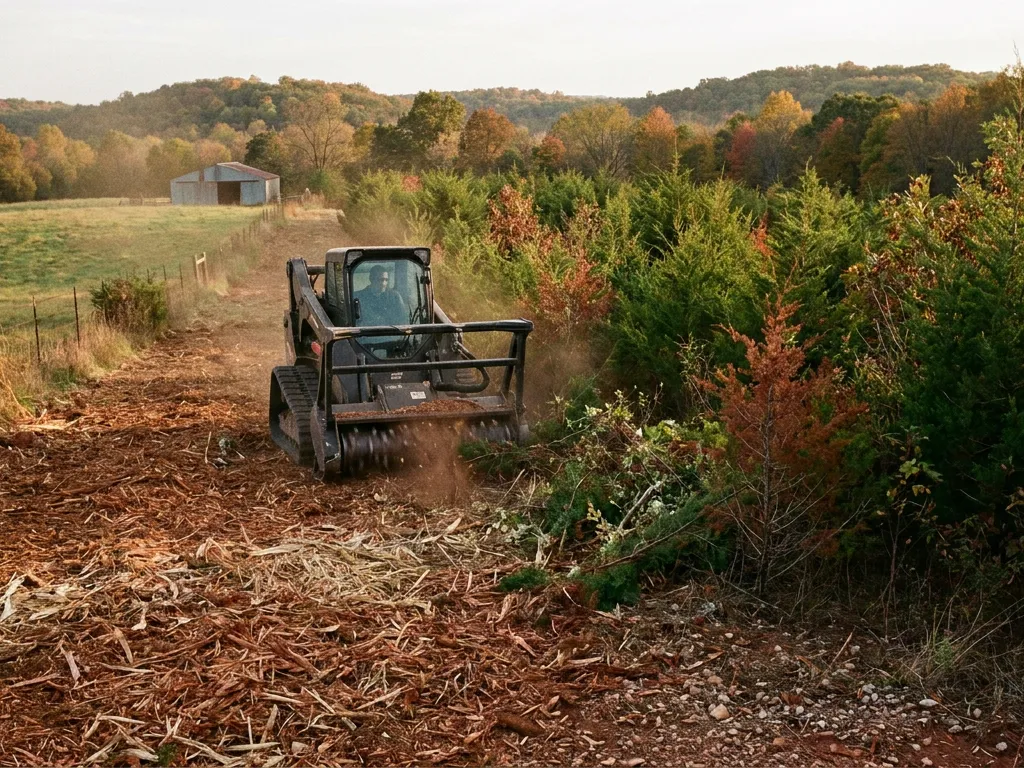
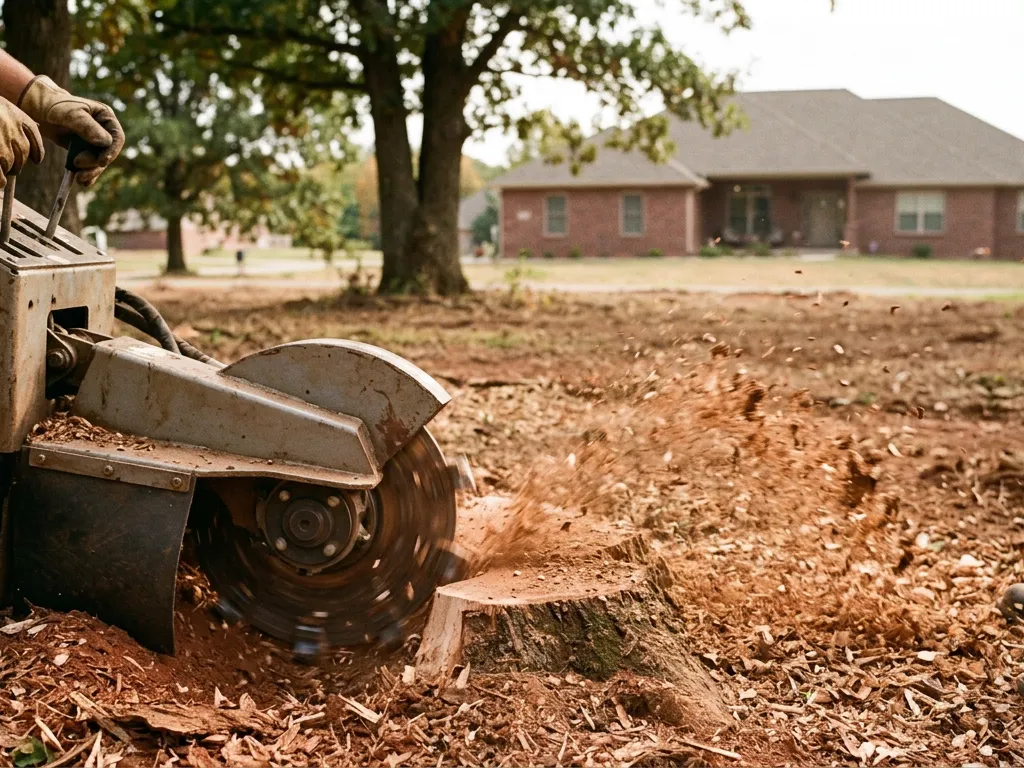
Land Clearing Pros of Springfield MO boils this comparison down to one question: how low does the stump need to go? A forestry mulcher grinds brush, saplings and stumps roughly to ground level as it crosses a pasture or woods. A stump grinder is a toothed wheel that chews one stump at a time down below the surface, so the spot can be filled and seeded. Most clearing jobs around Springfield use the mulcher on the open ground and the grinder where people will walk, mow or build lightly.
How low each machine takes a stump
| Forestry mulcher | Stump grinder | |
|---|---|---|
| What it is | Tracked skid steer or mulching tractor with a toothed drum or disc head | A toothed cutting wheel built for stumps |
| Stump height after | Roughly ground level with a drum head; a disc head leaves stumps visible | Usually 6 to 12 inches below grade |
| Works on | Brush, saplings and the stumps it passes over | One stump at a time |
| Best ground | Pasture, woods, fence rows and trails | Lawns, yard edges, beds and patios |
| Roots | Left in the ground | Left in the ground |
| Priced by | The acre or the hour | The stump |
The two machines overlap at ground level and nowhere else. A drum mulcher can grind a stump down to the ground, which is fine for pasture and woods. It does not go below the surface. A stump grinder goes 6 to 12 inches below grade, plenty for lawn and landscaping, so grass can grow over the spot.
When the forestry mulcher is enough
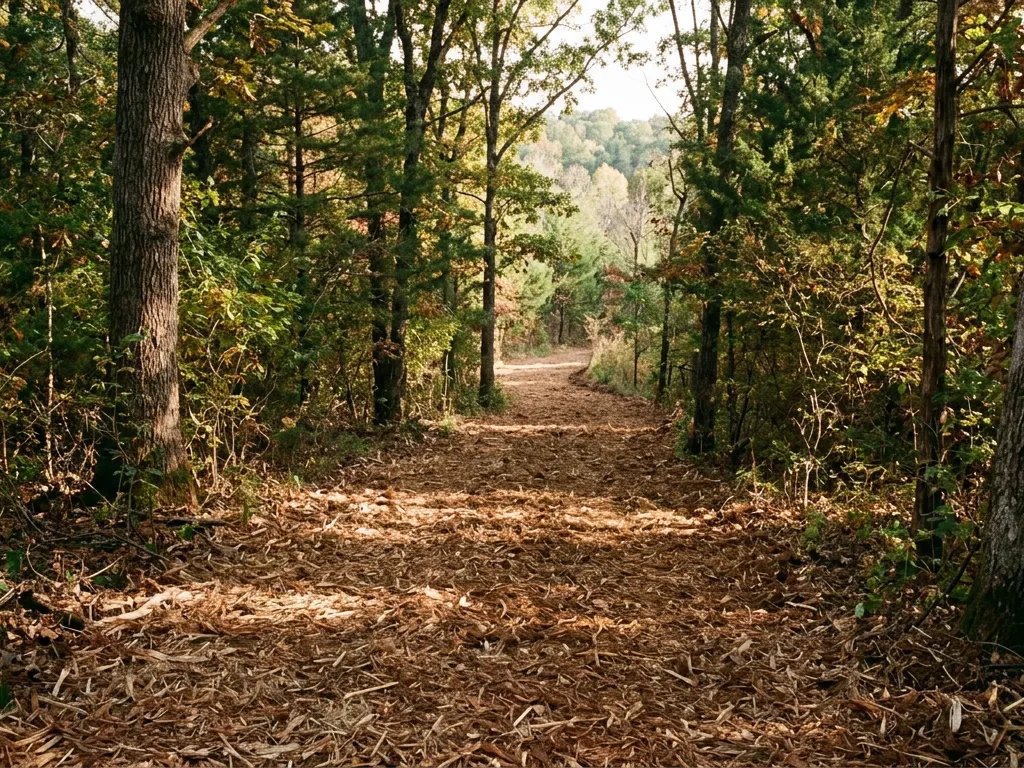
On pasture, hunting ground, woods and fence rows, the stumps are part of a larger job. Forestry mulching cuts and grinds the brush, cedar and saplings and spreads them as mulch in one pass, and a drum head takes the stumps it meets down to about ground level as it goes. Nothing is piled, hauled or burned, and nobody needs to come back for stumps unless they sit where a lawn will be.
A disc mulcher is faster through standing trees, but the mulch is coarser and the stumps stay visible. For ground you will mow, ask for a drum head or a second pass to bring the stumps down. For woods and hunting land, a disc finish is usually fine.
When a stump grinder is the right tool
A grinder earns its trip where a stump is in the way: sprouts coming up around an old stump every year, a stump where you want lawn, a bed or a patio, stumps scattered across a cleared lot you are selling, or stumps you keep hitting with the mower. It is also the usual finish after tree removal or a storm, when a yard has a handful of stumps and no brush to speak of.
Grinding leaves a pile of chips and soil roughly the size of the stump. Most of it goes back into the hole and the rest can be raked out as mulch. The chips settle over the next year, so top the spot with soil before seeding.
What each costs
| Job | Published range | Source |
|---|---|---|
| Stump grinding, per stump | $100 to $400 per stump | HomeGuide, 2025 |
| Stump grinding, first stump | $100 to $250 for the first stump | HomeGuide, 2026 |
| Stump grinding, each added stump | $30 to $60 per added stump | HomeGuide, 2026 |
| Forestry mulching, per acre | $400 to $800 per acre | HomeGuide, 2023 |
A stump grinder is priced by the stump, and the second, third and tenth stump cost far less than the first because the machine is already there. Size, wood hardness and access move each one. A forestry mulcher is priced by the acre or the hour, and the stumps on that ground are part of the price. Ask for a written price that says which stumps are ground below grade, which are mulched to ground level, and what happens to the chips.
The cheapest plan on a mixed property is usually both: mulch the open ground, then bring a grinder for the yard stumps in one visit. List every stump that needs to go below grade when you ask for prices, because grouping them is where the per-stump price drops. See stump grinding for what moves a grinding price.
Have stumps in a yard and brush on the back acreage? Count the stumps that need to go below grade and describe the rest, and ask for both priced on one written quote.
Call (417) 759-5914Chert, rock and buried lines
Both machines put teeth into the ground, and the ground around Springfield is hard on teeth. USDA's description of the Goss series, a gravelly soil mapped around Ozark and Sparta, puts the surface at about 15 percent chert gravel in its typical profile and the subsoil at 30 to 65 percent. A stump growing among chert or limestone wears grinder teeth quickly, and a contractor may stop short of full depth if the wheel finds ledge. Mulcher teeth take the same punishment wherever the head touches soil.
The grinder wheel also goes below the surface, so have underground utilities located through Missouri 811 before any grinding near a house, street or service line.
Building sites need neither on its own
Grinding and mulching both leave the roots in the ground. Under lawn that does not matter. Under a slab, a footing or a driveway it does, because roots left in the ground rot and settle. A building footprint needs the stumps and root balls pulled out with an excavator, which is grubbing and root raking, and that leaves a crater and a pile of roots and soil to deal with.
The permit line follows the roots. Greene County requires a grading permit for any non-agricultural land disturbance, defined as disturbing the root zone of existing vegetation, with the example that clearing trees with a dozer needs a permit and clearing with a chainsaw does not. Cutting above ground is close to the chainsaw case. Grinding stumps below grade, grubbing or grading afterward can change the answer, so confirm with the county for your property, especially near a sinkhole or in a mapped floodplain.
Choosing for each part of the property
- Pasture, woods or fence rows full of brush and stumps: forestry mulcher
- A few stumps in a yard after tree work or a storm: stump grinder
- Stumps where lawn, a bed or a patio will go: stump grinder, below grade
- A cleared lot going on the market: mulcher for the brush, grinder for the visible stumps
- A house pad, driveway or septic field: grubbing, not grinding
Storm cleanup in Battlefield and on Springfield's south side can leave a dozen stumps on one property, which is where a single grinder visit pays off.
Questions about a piece of ground near Springfield? Call (417) 759-5914
Frequently Asked Questions
Forestry Mulcher vs Stump Grinder in Springfield: Questions
Does a forestry mulcher grind stumps?
A drum mulcher grinds stumps to about ground level as it passes. It does not take them below grade, and a disc head leaves them visible.
How deep does a stump grinder go?
Usually 6 to 12 inches below grade, enough for lawn and planting beds. Rock or utilities can limit depth.
How much does stump grinding cost compared with mulching?
Stump grinding runs $100 to $400 per stump, with $100 to $250 for the first stump and $30 to $60 per added stump a common structure. Forestry mulching runs $400 to $800 per acre including the stumps on that ground.
Can I build where stumps were ground or mulched?
Not directly. Both leave roots that rot and settle, so a building footprint needs grubbing and root raking.
Do I need to call 811 before stump grinding?
Yes. The wheel goes below the surface, so have underground utilities located through Missouri 811 first.