Land Clearing Pros of Springfield MO: Drum vs Disc Forestry Mulchers on Springfield Ground
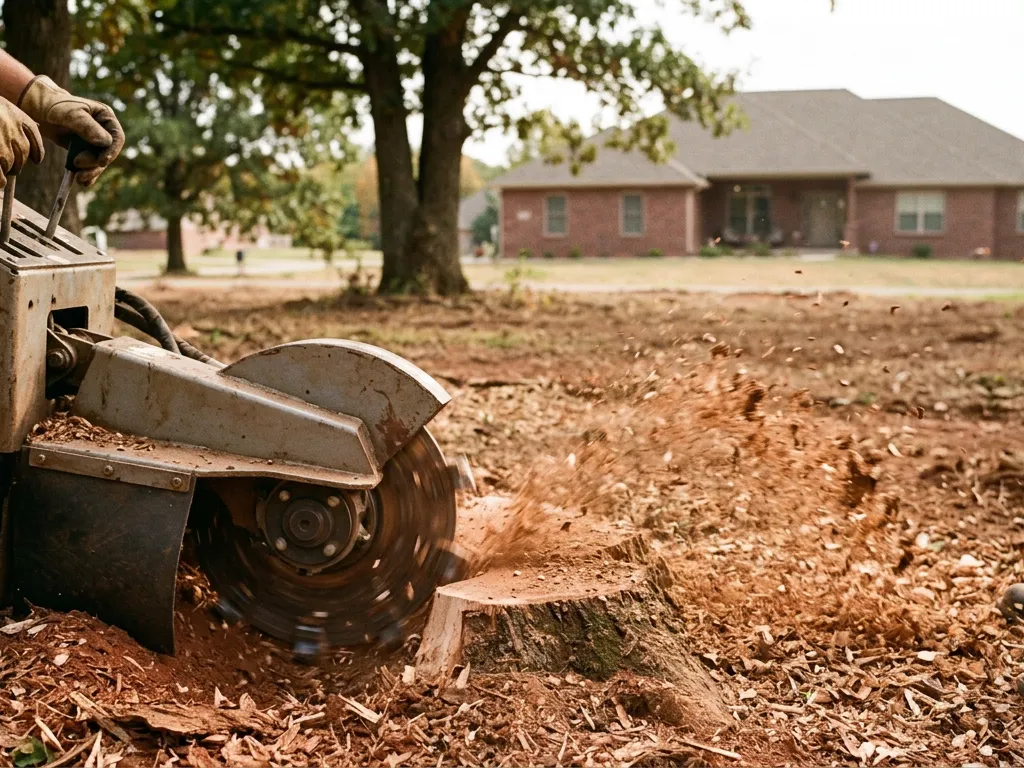
Land Clearing Pros of Springfield MO explains the two heads because they leave very different ground behind, and the choice is often made for you by whoever owns the machine. A drum mulcher spins a horizontal drum fitted with teeth and makes a fine mulch that can take a stump down to the ground. A disc mulcher spins a heavy flat disc, works faster through standing trees, and leaves coarser mulch with the stumps still showing. Around Springfield, the soil under the brush matters as much as the brush itself.
Drum head and disc head side by side
| Drum mulcher | Disc mulcher | |
|---|---|---|
| Cutting head | Horizontal drum fitted with carbide or steel teeth | Heavy flat disc spinning across the front |
| Mulch | Fine | Coarser |
| Stumps | Ground roughly to ground level | Left visible |
| Speed through standing trees | Slower | Faster |
| Best finish for | Pasture, yards and any ground you will mow | Woods, hunting land and trails |
| Carrier | Usually a tracked skid steer or mulching tractor | Usually a tracked skid steer or mulching tractor |
Both heads do the same basic job: cut standing brush and trees, grind them, and spread the result over the ground in one pass with nothing piled, hauled or burned. The roots stay in the ground either way. The difference is the finish, and the finish is what you live with afterward.
What the finish looks like a season later
A drum head's fine mulch lies close to the soil and hides the ground faster. Stumps ground to ground level disappear under it, so a mower can cross the field the next summer. Grass and wildflowers come through the chips, and the layer holds soil on slopes while it breaks down.
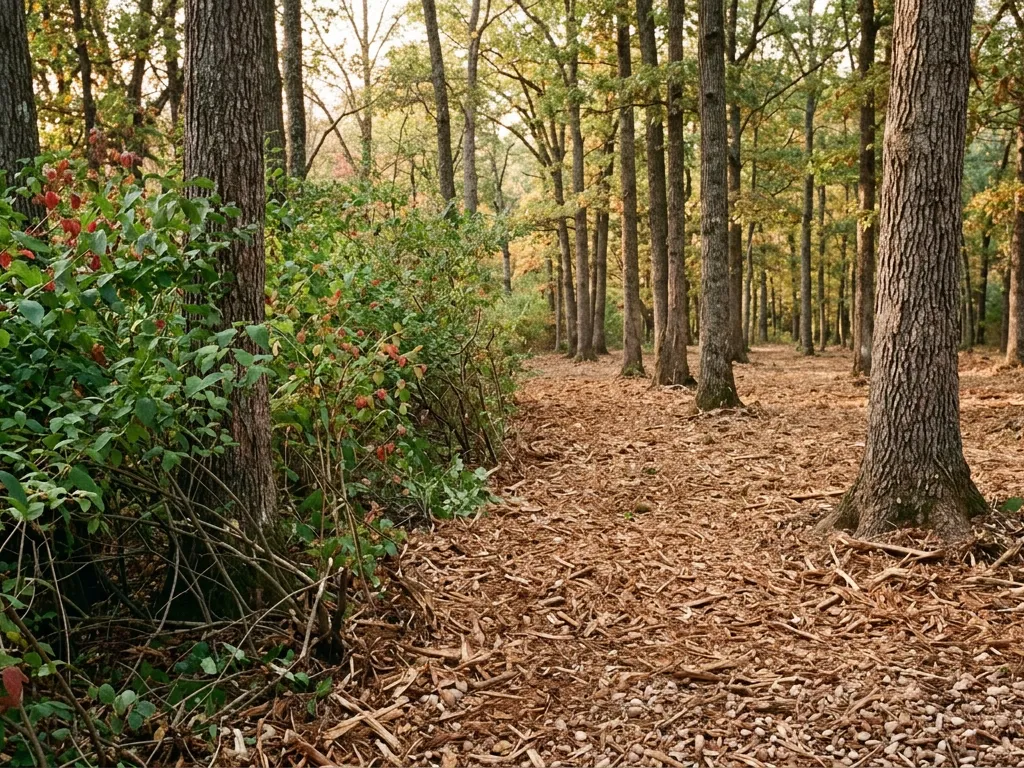
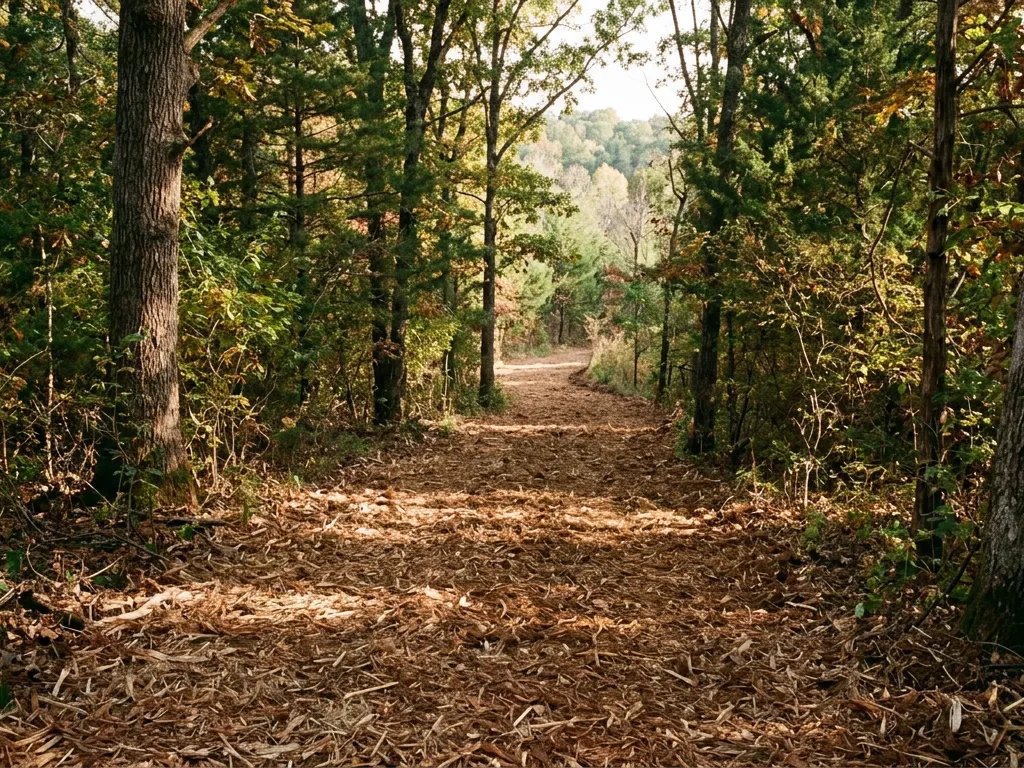
A disc head's coarser chips and visible stumps are fine in the woods, where nobody mows and the point was to see and walk through the timber. On pasture or a yard, those stumps become something to mow around. For ground you will mow, ask for a drum head or a second pass to bring the stumps down. For hunting land and woods, a disc finish is usually fine and can cost less because the machine moves faster.
Either way, cedar does not resprout from a cut stump, but hardwoods and honeysuckle do. Plan on mowing once or twice a year, a cut-stump herbicide on resprouts, or grazing, whichever head did the work.
Chert decides more than the brush does
Much of the ground around Springfield is full of chert, the hard rock left behind as cherty limestone and dolomite weather. USDA's description of the Goss series, the gravelly soil mapped around Ozark and Sparta, puts the surface at about 15 percent chert gravel in its typical profile and the subsoil at 30 to 65 percent. The Needleye series mapped at Battlefield and Strafford has a fragipan at 18 to 36 inches with chert content of 20 to 70 percent in that layer.
A mulcher head that touches that ground pays for it in teeth. Chert chews up teeth on either head, and on most Springfield-area jobs the drum is the better fit, because a finer mulch hides the ground faster once the work is done. Ask how the contractor handles chert: whether tooth wear is built into the price or billed as it happens.
Wet ground and slopes
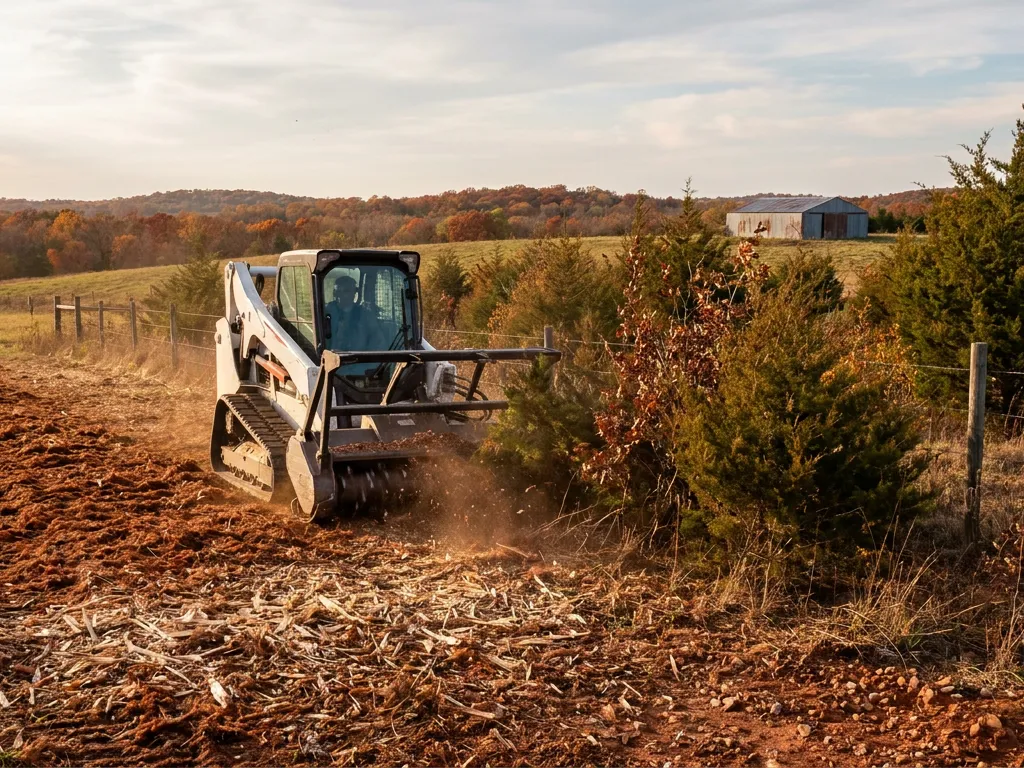
The machine carrying the head matters as much as the head. Tracked machines float over wet silt loam and grip on the slopes along creeks. Around Strafford, Battlefield, Republic, Nixa and Clever, USDA maps fragipan soils that stay soft from late winter into spring. A tracked mulcher can often keep working there when grubbing and grading should wait. Agree in the quote what happens on a wet day.
What the head choice costs
| Item | Published range |
|---|---|
| Forestry mulching, per acre | $400 to $800 per acre |
| Forestry mulching, light to dense growth | $400 to $2,000 per acre |
| Forestry mulching, per hour | $125 to $300 per hour |
| Forestry mulching, per day with operator | $1,000 to $2,500 per day |
| Typical minimum charge | $400 to $600 minimum |
| Mobilization | $150 to $300 per visit |
These are national averages from HomeGuide's forestry mulching guide, and no published band splits drum work from disc work, so the head is priced per property. In general a faster head means fewer machine hours on the same ground, and a second pass to bring stumps down adds hours. Density, stem size, slope and rock move the number more than the head does. A skid steer mulcher typically covers 1 to 3 acres a day, and a larger mulching tractor up to 15 acres a day on open ground. Ask for a written price that names the head, the finish you expect and whether a second pass is included.
Not sure which head your ground needs? Describe what will happen to the land afterward and how rocky it is, and ask for a written price that names the head and the finish.
Call (417) 759-5914Questions to ask before the machine arrives
- Which head is on the machine, drum or disc, and can it be swapped?
- What diameter will the head take, and what happens to anything larger?
- Will stumps be ground to ground level, or left at the height the head leaves them?
- Is a second pass included on ground I plan to mow?
- How is tooth wear on chert handled in the price?
- What happens if the ground is too wet on the planned day?
Matching the head to the ground
- Pasture you will mow or graze: drum, or disc with a second pass
- Woods you want to walk, hunt or see into: disc is usually fine
- Trails and food plots: drum where the ground will be seeded, disc for walking paths
- Rocky, chert-heavy ground: drum in most cases, with tooth wear agreed in the price
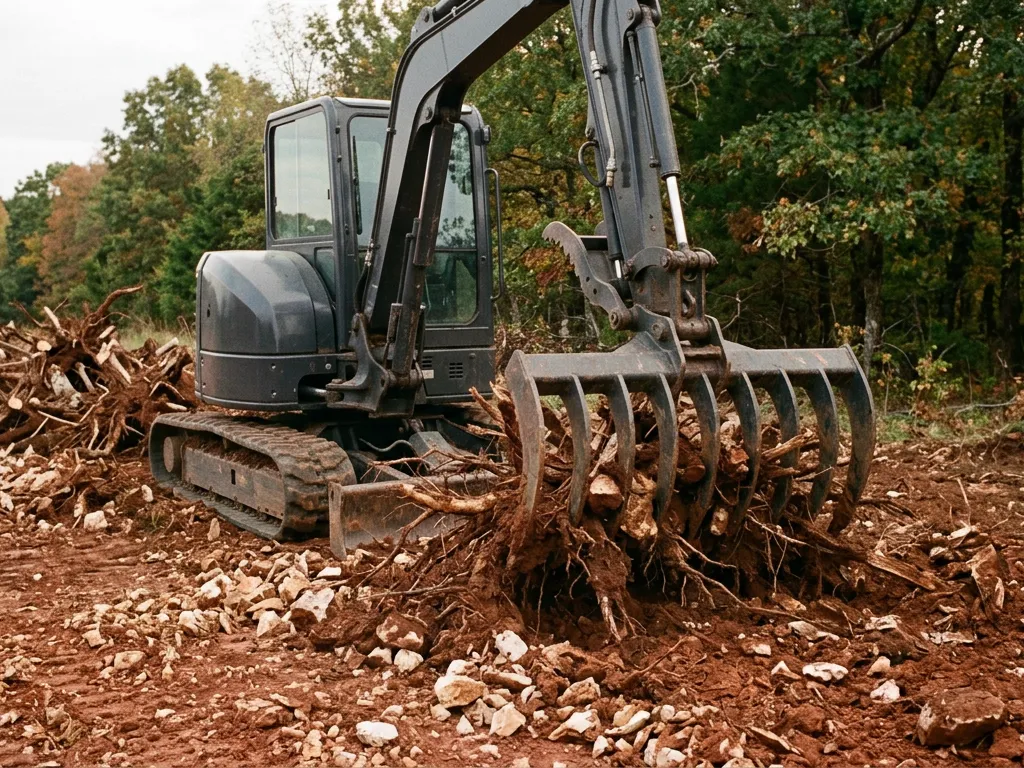
- A house pad or driveway: neither on its own, because roots stay; see grubbing and root raking
The forestry mulching page covers what a mulcher handles, and cedar tree removal covers larger cedar, which is usually cut and handled separately.
Why mulching rarely needs a county grading permit
Greene County requires a grading permit for any non-agricultural land disturbance, defined as disturbing the root zone of existing vegetation, with the example that clearing trees with a dozer needs a permit and clearing with a chainsaw does not. Either head cutting above ground and leaving the roots is much closer to the chainsaw case. Grinding below grade or grading afterward can change the answer, so confirm with the county for your property, especially near a sinkhole or in a mapped floodplain.
Questions about a piece of ground near Springfield? Call (417) 759-5914
Frequently Asked Questions
Drum vs Disc Forestry Mulchers on Springfield Ground: Questions
What is the difference between a disc and drum forestry mulcher?
A drum mulcher makes a fine mulch and can grind stumps to the ground. A disc mulcher is faster through standing trees but leaves coarser mulch and visible stumps.
Which forestry mulcher head is better for pasture?
A drum head, or a disc head followed by a second pass, because stumps left visible become something to mow around.
Is a disc mulcher cheaper than a drum mulcher?
No published band splits the two. A faster head can mean fewer machine hours, so a disc finish on woods can cost less. Mulching overall runs $400 to $800 per acre.
Does chert damage forestry mulcher teeth?
Yes. Chert wears teeth on either head, and the soils around Springfield carry a lot of it. Ask how tooth wear is handled in the price.
Does a forestry mulcher remove stumps?
A drum head grinds stumps to about ground level; a disc head leaves them visible. Neither pulls roots out of the ground.